
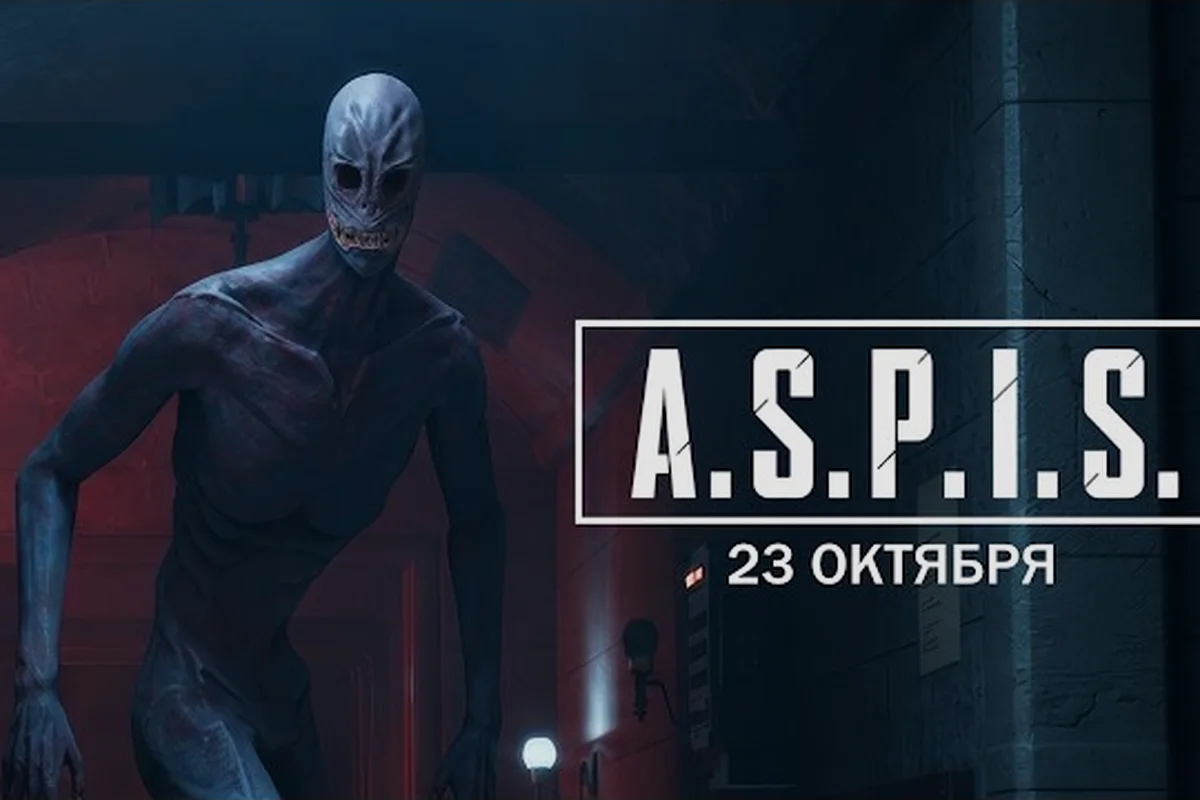
The ASPIS project anchors the game’s alternate Soviet mystery: OGAS, the KGB, six volunteers, and a 1987 experiment that apparently outlasted its planned schedule. Its history matters because the official premise still leaves the system’s mechanism—and even the nature of the places it opens—unresolved.
ASPIS Project Overview: The Core 1987 Experiment
The game places its central mystery in an alternate version of the USSR in 1987, where engineer Andrey becomes involved with a strange research project. The official store description identifies the Institute of Cybernetics, OGAS terminals, and six volunteers as key elements, while the project’s full name is presented as the Autonomous System for Predicting Historical Events. That formal name suggests an ambitious forecasting system, but the story quickly complicates any straightforward interpretation of it.
The experiment was expected to last days, yet official material says that well over a year elapses inside the system because time moves far faster there. A year after the experiment begins, none of the six volunteers has awakened. This mismatch is the first reliable clue that ASPIS is operating under rules the Institute of Cybernetics did not fully anticipate.
| ASPIS project element | Officially established detail | What it contributes to the story |
|---|---|---|
| Time and place | USSR, 1987 | Establishes the alternate-history setting |
| Organization | Institute of Cybernetics | Provides the research and institutional backdrop |
| System | OGAS | Links the research experiment to the terminals encountered in-game |
| Participants | Six volunteers | Defines the human cost of the failed timeline |
| Central character | Andrey, an engineer | Grounds the mystery in a personal family tragedy |
| Duration | Days inside, more than a year elapsed outside | Demonstrates the anomaly created by the experiment |
How Project History Explains Andrey's Decision
The project’s history is not merely background decoration. It explains why Andrey is willing to enter a dangerous environment, why information comes through terminals and documents, and why the KGB presence is relevant to the Institute rather than an unrelated historical detail. It also establishes a careful boundary between fact and interpretation: official material explains the setting and premise, but it does not disclose the experiment’s final outcome or whether the events inside ASPIS are simulated.
That distinction is essential. The official site says ASPIS is not a simulation, yet it also describes the system as a passage into spaces whose physical rules stop matching our own. Readers can therefore treat the “simulation” explanation as a theory rather than confirmed lore. The official ASPIS website also provides the full expansion of the project name and names several recurring elements, including OGAS terminals, the PEP-01 device, and Energy X.
Andrey, Anna, and Liza
The project’s human context begins with Andrey, whose deceased wife is Anna and whose daughter is Liza. This family connection gives the experiment a reason to continue beyond its apparent failure. Andrey is not introduced simply as a generic researcher; his background ties his decisions to grief, responsibility, and the desire to recover what was lost.
The official premise also identifies six volunteers connected with the experiment. Their absence becomes significant because nobody wakes after a full year. While official material does not provide a complete account of every volunteer, that shared participation makes ASPIS a collective undertaking rather than Andrey’s private encounter with an unexplained device.
OGAS and the Institute: How the ASPIS System Works
OGAS is central to the aspis ogas mystery, but the official information describes its role through terminals, information access, and the wider ASPIS structure rather than a complete technical specification. The safest reading is that OGAS serves as the interface through which participants encounter the project, although its origins and the full extent of its capabilities remain open questions.
The official site identifies the Institute of Cybernetics as the research setting, while the store page names OGAS terminals among the story elements. The PEP-01 device interacts with Energy X and opens astral windows between layers of reality. Together, these details create a progression from Soviet research hardware to a place that does not follow ordinary physical laws.
| Element | Role in the official premise | Lore status |
|---|---|---|
| OGAS terminals | Connect the characters with ASPIS and its information systems | Confirmed presence, wider purpose unclear |
| Institute of Cybernetics | Hosts or supports the experiment | Confirmed organization |
| PEP-01 | Interacts with Energy X and opens astral windows | Confirmed device and function |
| Energy X | Connected to the PEP-01 and reality layers | Confirmed, deeper meaning unclear |
| Astral windows | Passages into different layers of reality | Confirmed system function |
| Documents and recordings | Supply information about the experiment | Confirmed as story evidence, interpretation varies |
OGAS as an Interface, Not a Final Answer
Treating OGAS only as a computer terminal misses its narrative purpose. A terminal is a meeting point between the Soviet institution and the unknown system; it is where official science attempts to observe, command, or understand events. Because the game combines OGAS with astral windows and faster time, the interface may be more than a conventional screen.
That does not prove OGAS created the other layers or that the volunteers were transferred electronically. The official account expressly leaves the mechanism unresolved. A more defensible reading is that OGAS is the controllable threshold: familiar enough to operate, but powerful enough to expose characters to realities the Institute cannot categorize.
The overview of OGAS and its surrounding lore draws together the terminal’s archival records, institutional references, and repeated anomalies that separate the documented Aspis setting from later community interpretation. Its value lies in the comparison: the KGB and Institute records establish what personnel could observe and report, while OGAS commands, astral windows, and faster-time events show where the official chronology breaks down. That distinction matters for the 1987 timeline because unexplained testimony and altered records become evidence of an unresolved boundary, not proof of a single established cause.
The PEP-01 and Energy X
The PEP-01 is the clearest piece of ASPIS technology identified in official material. It interacts with Energy X and opens astral windows, making it more than a convenient key or combat item. Its stated function links laboratory apparatus to traversal between layers, which helps explain how an Institute project could become associated with the island environment, the red world imagery, and other locations encountered during the story.
However, the device’s operation should not be confused with proof that ASPIS is an artificial environment. The project’s official materials explicitly reject a simple simulation label. Energy X may function as an energy source, a signal, a substance, or a conceptual bridge; the game’s evidence does not justify selecting one explanation as settled fact.
A practical timeline for the ASPIS project’s equipment would therefore distinguish established events from interpretation: OGAS research and the volunteer experiment precede the PEP-01’s first Energy X activation, while the astral windows mark a shift from conventional Institute work toward interlayer traversal. Because no fixed dates or operating rules are supplied by the official material, the sequence below should be read as a reconstruction of what the character can know—not a calendar for the project’s final configuration.
| Stage | What the character can know | Reasonable interpretation |
|---|---|---|
| Before the experiment | The Institute conducts research involving OGAS and the volunteers | A classified Soviet research program |
| Early entry | The system connects with unusual phenomena | ASPIS exceeds ordinary Institute assumptions |
| PEP-01 use | Astral windows can be opened | The device mediates movement between layers |
| Extended stay | Outside time advances while inside time moves faster | The experiment’s schedule has broken down |
| Final choice | One decision produces two endings | The project’s uncertain legacy drives the climax |
ASPIS and the KGB: Institutions, Control, and Secrecy
The KGB’s presence gives the aspis kgb story dimension, especially because the Institute of Cybernetics operates in a Soviet research environment where unusual experiments would attract state scrutiny. Official material confirms the KGB building and its combination-lock puzzle, but it does not publish a complete account of the agency’s commands, motives, or involvement in every experiment decision.
That distinction prevents lore analysis from becoming an unsupported conspiracy narrative. The KGB may provide oversight, security, or access to restricted facilities, but those roles are not interchangeable. The concrete clue is the physical KGB site and its lock; broader claims about command structures remain interpretation.
| Institution or group | Confirmed role | Reasonable question it raises |
|---|---|---|
| Institute of Cybernetics | Conducts the ASPIS experiment | Who within the Institute understood the risk? |
| KGB | Has a recognizable facility in the game | How closely did state security monitor the project? |
| Six volunteers | Participate in the experiment | Who selected them and what were they told? |
| The Director | Leads Andrey deeper and promises answers | Whether the Director serves the Institute or the system |
| The Cat | Helps Andrey read the rules of the place | Whether the rules can be learned rather than merely obeyed |
KGB Involvement Without Invented Details
The game supports an aspis kgb reading built on visible locations, sealed access, and institutional tension. It does not support precise claims about particular officers, operations, or covert motives that are not named in official material. That distinction is especially important for maintaining a useful history of the project: documented space, documented characters, and documented objectives should always be separated from plausible theories.
The KGB combination lock and the underground spaces associated with the complex are best approached as physical evidence. The walkthrough for the KGB combination puzzle can help players interpret those spaces as part of the larger institutional environment rather than as isolated set pieces.
Secrecy as a Structural Principle
Across the ASPIS project, knowledge is unevenly distributed. The Institute has technical language and facilities, but its personnel still depend on the system’s internal rules. The Director offers direction while withholding the larger picture, and the Cat interprets a reality that standard Soviet disciplines cannot fully describe.
This framework makes secrecy legible by sorting each textual trace according to what it actually reveals: a confirmed institutional fact, a mechanically supported inference, or a provisional reconstruction of OGAS’s anomalous function. In practice, the 1987 timeline and Institute procedure notes can establish chronology and protocol, while the Cat’s testimony exposes the limits of KGB and Soviet technical categories. Because the ASPIS project distributes both authority and understanding, the strongest reading often emerges from comparing the Director’s instructions with OGAS interfaces, environmental anomalies, and dialogue that the institutional record cannot explain.
-
Explicit statements establish the premise, such as the setting, named participants, and confirmed device functions.
-
Strong evidence supports an inference, such as OGAS acting as the principal interface with the anomalous space.
-
Weak evidence belongs in the theory category, such as assigning a specific outcome to the experiment before reaching the game’s conclusions.
ASPIS 1987 Timeline: From Volunteer Selection to Two Endings
The aspis 1987 setting places the experiment in a precise year, but the story operates across two incompatible rhythms. The Institute expects a short experiment measured in days, while participants experience accelerated time and remain trapped for more than a year. This split is the clearest organizing principle for the aspis timeline.
The public release information places ASPIS’s launch in 2026, but that is the game’s release date, not its fictional date. The chronology below concerns the events depicted in the alternate USSR, beginning with preparation and continuing through the Director’s descent, the stranded volunteers, and the final choice between two outcomes.
| Approximate story point | Event | Significance |
|---|---|---|
| Before the experiment | The Institute prepares the project and recruits six volunteers | Establishes institutional control and voluntary risk |
| 1987, initial phase | Andrey becomes involved with the system | Begins the personal search tied to Anna and Liza |
| Early entry | The project opens access to unusual spaces and phenomena | OGAS and the PEP-01 become active |
| Planned period | The experiment is expected to last days | Creates the baseline for measuring the failure |
| Extended period | well over a year elapses because time inside accelerates dramatically | Shows that normal procedures no longer apply |
| One year later | None of the six volunteers has awakened | Confirms the severity of the anomaly |
| Deeper journey | The Director leads Andrey onward while promising answers | Escalates the project from experiment to search |
| Climax | One final choice leads to two endings | Leaves the legacy of ASPIS dependent on the decision |
How the Time Gap Creates a Crisis
The time discrepancy transforms the project from a failed technical test into a temporal crisis. If only days passed for the Institute, the missing volunteers could still be treated as patients in a controlled procedure. After a year without awakening, the question becomes who or what is enforcing the separation between participants and the outside world.
This also shapes the meaning of Andrey’s family story. The passage of outside time does not simply lengthen the adventure; it means decisions made inside the system can carry consequences that Andrey cannot immediately reverse. The project’s history is therefore a history of lost time, not only a history of technology.
The broader ASPIS story explained can help place Andrey, the Institute, the Director, and the volunteer crisis within the game’s narrative structure, while the official ASPIS Steam page remains the primary source for the setting, participants, devices, and ending structure.
Two Endings and the Unresolved Legacy
Official material confirms that one choice leads to two endings, but it does not treat the experiment’s mechanism or ultimate outcome as a single predetermined fact. The best way to describe the aspis history is therefore chronological up to the choice, followed by a branching endpoint whose meaning can be evaluated through the game’s evidence.
That structure supports several legitimate interpretations. The project may be an uncontrolled transfer mechanism, an opening into other realities, or a system whose purpose differs from its stated name. None of those possibilities needs to be declared canonical without stronger textual support. The timeline records what happens; the interpretation layer records what the evidence permits.
Reading the ASPIS Records and Community Interpretations
Documents, audio logs, achievements, and environmental details form the evidence base for the project’s history. They can be read in a clear order: identify what an item depicts, note who can access it, compare it with the official premise, and only then connect it to another theory. This method keeps useful clues separate from circular assumptions.
Player reports can add texture, but they should not be promoted to fact. According to community experience, discussions often compare early terminal findings with later revelations and attempt to connect the red world, astral windows, and the Director’s actions. Those comparisons are useful when they point back to observable evidence, but an interpretation becomes stronger only when multiple details support it.
| Evidence type | Strongest use | Common overreach to avoid |
|---|---|---|
| Official premise | Establishing setting, people, devices, and chronology | Claiming an undisclosed mechanism |
| Terminal text | Tracking access, warnings, and changes in ASPIS | Assuming every command has a real-world parallel |
| Documents and logs | Reconstructing the Institute’s knowledge and decisions | Treating every document as historically reliable |
| Environment | Confirming transitions, locations, and physical effects | Assigning a named origin to every unexplained structure |
| Community reports | Generating questions and spotting recurring motifs | Presenting speculation as confirmed lore |
A Method for Separate Facts and Theories
A reliable lore note should contain two layers. The first records the aspis project facts: the alternate USSR, the Institute, six volunteers, OGAS, the PEP-01, accelerated time, and the final choice. The second identifies the interpretive claim attached to each fact and its counterevidence.
For example, OGAS is confirmed as a terminal-connected element, so describing it as the project’s interface is reasonable. Declaring that it created the other realities would exceed the available evidence. Likewise, the absence of waking volunteers is official, while the reason for their absence remains unresolved.
The ASPIS documents overview provides a useful companion for cataloging evidence in this way, especially when separating institutional records from later deductions. A practical approach is to classify each entry by its evidentiary status: a dated KGB order or project report can establish what the Institute recorded in 1987, whereas an annotation linking OGAS to the other realities is a theory requiring independent support. This distinction matters because the aspis project’s official timeline includes the PEP-01 deployment, accelerated time, and the final choice, but the causal role of OGAS—and the explanation for the volunteers’ fate—remains disputed.
What the Records Leave Unresolved
Three questions remain central because the official material does not answer them. First, what precisely does OGAS predict? The expanded project name suggests historical forecasting, but the actual results are never fully defined. Second, what caused the time divergence? Third, what was the original purpose of the PEP-01 and Energy X beyond enabling interaction with unusual layers?
These gaps do not make the lore empty. They define the project as an open experiment in a larger story. The game’s two endings provide a final branch, while the underlying causal mystery remains part of the experience. A deeper look at the red world and possible reality layers can therefore explore the evidence without pretending that one theory settles every question.
The Practical Meaning of the ASPIS Timeline
The timeline can also be used as a map for interpreting the player’s journey. Early material establishes the Institute and the promise of prediction; the first traversal of the system shows that ordinary rules no longer apply; the accelerated passage of time confirms that the experiment cannot be recovered on schedule; and the later descent turns Andrey’s search for answers into a confrontation with the project’s consequences.
This reading avoids assigning a precise chapter structure that official material does not publish. Instead, it follows documented milestones in the narrative itself. The 2025 demo served as an extended prologue introducing the Institute and premise, but the full version’s story is what confirms the completed arc and its two endings.
| Player observation | What it contributes to the ASPIS history |
|---|---|
| Learning that ASPIS is not simply a simulation | Preserves the distinction between official claim and theory |
| Finding the PEP-01 | Connects Soviet research to astral windows and Energy X |
| Seeing accelerated time | Establishes the experiment’s temporal failure |
| Encountering the Director | Introduces the guide who promises deeper answers |
| Learning about the stranded volunteers | Gives the failure a human and institutional consequence |
| Reaching the final choice | Shows that the project’s legacy branches rather than ending in one fixed way |
Separating Project History from Ending Theories
A timeline explains sequence, whereas an ending theory interprets the final branch and its wider implications. Keeping those jobs separate makes analysis more precise. A theory may explain how the choice reflects earlier events, but it should still be checked against the established chronology.
The same rule applies to the Guardian. Official material says that it cannot simply be shot, which supports treating it as more than an ordinary combat obstacle. It does not prove a supernatural origin, a direct connection to OGAS, or a specific historical identity. Those claims require additional evidence from the game.
A Concise Reader’s Framework
Use this framework whenever a new document, conversation, or environmental detail appears in the ASPIS 1987 record. First locate the item within the aspis timeline, then distinguish who reports it—especially Andrey, the Director, the Cat, the Institute, and the KGB—before comparing direct observations with interpretation. For example, a store-page description can anchor an official function, while a contradictory statement from the Cat may reflect a different layer of reality rather than a simple error in the aspis history.
-
Place it in the ASPIS 1987 chronology. Decide whether it belongs to preparation, the initial experiment, the extended stay, the deeper journey, or the final decision.
-
Identify the speaker or institution. Andrey, the Director, the Cat, the Institute, and the KGB should not be treated as equivalent sources.
-
Separate observation from conclusion. Record what the evidence directly shows before interpreting why it exists.
-
Check the official premise. Use the store page, official site, and announcements as anchors for names and confirmed functions.
-
Record contradictions. Conflicting information may be intentional, character-specific, or tied to a different layer of reality.
This process turns the aspis timeline into a reusable research method instead of a fixed list of guesses. It also helps explain why the project remains compelling: the official record establishes enough structure for confident analysis while preserving several legitimate interpretations.
Frequently Asked Questions
What is the ASPIS project in the game?
The ASPIS project is a classified experiment conducted in an alternate-history USSR during 1987, with the Institute of Cybernetics and six volunteers connected to it. Its full name is Autonomous System for Predicting Historical Events, although the OGAS terminals and PEP-01 lead into phenomena the Institute does not appear to fully understand.
Is ASPIS a simulation?
No, not according to the official description. The official site states that ASPIS is a passage into spaces whose physical rules stop matching our own, while the game leaves its actual mechanism unexplained. Claims that the entire experience is simulated remain theories, so simulation language should be treated as interpretation rather than confirmed lore.
What is the role of OGAS in ASPIS?
OGAS is presented through the terminals that connect the story to the ASPIS system, making it the clearest interface between the Institute’s research and the anomalous places beyond. Its complete capabilities, predictive purpose, and relationship to the accelerated timeline are not officially disclosed, so claiming that it created every layer would exceed the evidence.
What happened to the six ASPIS volunteers?
The official material states that one year after the experiment began, none of the six volunteers had awakened. Time inside the system moves much faster than time outside, and the project was expected to last only days. The precise reason for their condition, along with the experiment’s ultimate outcome, remains unresolved in the published premise.
Does the KGB control the ASPIS experiment?
The game includes a KGB building and clear signs of institutional secrecy, but official material does not publish a complete command structure for the project. The KGB may have provided oversight or restricted access, yet it is safer to distinguish the documented facility and era from broader claims about exact motives. The ASPIS timeline is better grounded in confirmed characters, locations, and events than in assumed assignments of authority.