
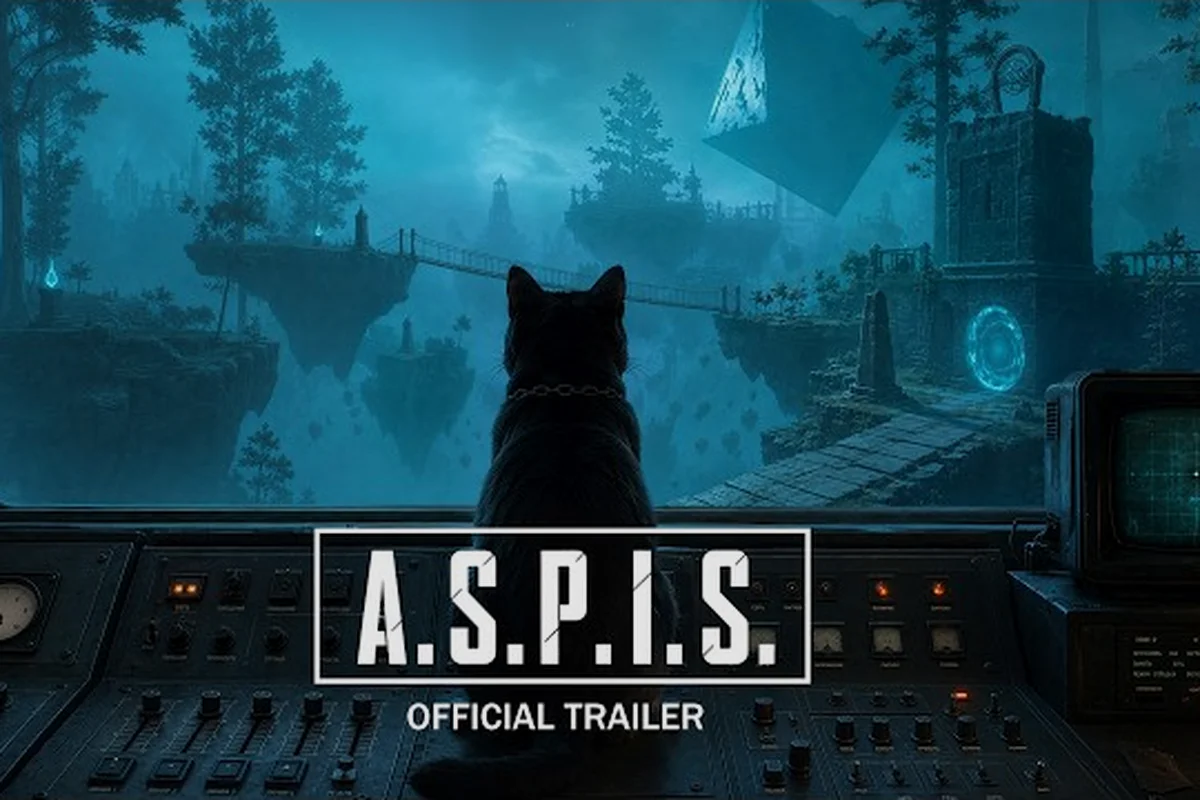
ASPIS places you in an alternate USSR in 1987, where a dangerous experiment blurs the boundary between reality. This complete guide begins with the prologue, maps the essential keyboard controls, and follows early exploration, combat encounters, and consequential story decisions through your first hour. Learn how movement, interaction, and dialogue choices affect what you uncover, while understanding which combat decisions can derail a run or lock away a more favorable outcome.
ASPIS Complete Guide: Start With the Right Expectations
ASPIS is a story-driven survival-horror adventure built around exploration, resourcefulness, and a reality-bending experiment called PEP-01. Rather than handing you a menu of quests or a map full of markers, the game asks you to read the environment, talk with the people around you, and decide which clues deserve attention. Knowing the basic premise, control conventions, and early priorities makes the opening easier to approach without flattening its deliberate sense of uncertainty.
The game begins in the Soviet Union of 1987, but this is an alternate version of that period. You play Andrey, an engineer whose deceased wife is Anna and whose daughter is Liza. Six volunteers are connected to the experiment. The official ASPIS page on Steam describes the Institute of Cybernetics, the OGAS terminals, the PEP-01, and the forces that will test the group.
| Start with | Why it matters |
|---|---|
| Andrey’s family connection | Gives the experiment an immediate emotional stake |
| Six volunteers | Establishes the group whose choices shape the story |
| PEP-01 | Explains your access to Energy X and astral windows |
| OGAS terminals | Provides key story information through the system |
| Resource searching | Ammunition and other useful items must be found in the environment |
| Final choice | The campaign ultimately leads to one of two endings |
Read the opening without rushing
The prologue is designed to establish the Institute, the volunteers, and the experiment before the situation becomes more dangerous. Listen to conversations and inspect environmental details even when the immediate objective seems obvious. This is especially important because ASPIS uses a custom subtitle system designed to synchronize dialogue, text, and scene events, meaning important information may arrive through several presentation methods.
This aspis prologue guide approach works best if you alternate between two activities: following the current interaction and searching nearby rooms for context. A terminal may explain the systems, while a note or conversation may reveal a person’s motivation. Do not assume that one source contains the full answer, because the story frequently gains meaning when information from different people and places is considered together.
The 2025 demo was an extended version of the prologue and offered up to two hours of gameplay. That confirms the demo’s focus, but it does not establish the full game’s chapter count or completion time. For a clearer distinction between the demo and release content, see the demo versus full game comparison.
ASPIS Getting Started: Controls, Equipment, and Early Routine
Learning the movement and interaction patterns prevents avoidable frustration during the opening. ASPIS supports keyboard use, although the developer has not published a complete official keybind table. The interface also includes selectable equipment and on-screen task text, while the flashlight has its own brightness control. Because exact bindings can change, treat the following action list as a functional map rather than a literal key map.
ASPIS keyboard controls
This aspis keyboard controls overview groups essential functions by purpose, including exploration, combat, equipment management, X-sphere capture, and pausing the simulation. Check the game’s options menu before beginning because the assigned keys can differ from earlier demo documentation, and keep the movement, fire, melee, capture, and pause inputs distinct. For example, an X-sphere capture requires pressing the capture button instead of holding it, while the pause control genuinely stops the simulation in the released version.
| Action | What to do |
|---|---|
| Move | Use the movement keys assigned in the options menu |
| Look around | Move the mouse while keeping the focus on exploration |
| Interact | Select objects, terminals, doors, and people when the prompt appears |
| Inventory or equipment | Open the equipment interface, which uses a circular menu |
| Aim and fire | Use the Makarov pistol controls and release the fire input |
| Melee attack | Use the assigned melee input when a firearm is unavailable or impractical |
| Use PEP-01 | Interact with the device when a prompt or story event permits it |
| Capture an X-sphere | Press the capture button rather than holding it, following the technical update |
| Pause | Use the pause control, which now actually stops the simulation in the released version |
Mouse movement controls the camera, while separate X and Y mouse inversion options were documented during demo testing. The demo also added a maximum field of view of 120 degrees. These are genuine settings features, but they should not be confused with a broader performance guide or evidence of a standardized difficulty selector.
Players who prefer alternate input methods can review controller support and display settings. That article is particularly useful for field-of-view and mouse-inversion questions, although no official controller layout should be assumed without checking the game itself.
Prepare a minimal exploration loadout
Andrey can use a Makarov pistol and engage in melee combat. Ammunition and other resources are found while exploring, which makes searching containers and rooms a practical part of survival rather than an optional side activity. The official material does not publish ammunition capacity, weapon damage, or a numeric scarcity rating, so avoid treating any unofficial inventory calculation as authoritative.
A good early routine is straightforward: begin with the Makarov pistol, treat ammunition as a limited conditional resource, and use melee combat only when firearm use is impractical. While exploring, prioritize searching containers and rooms for ammunition and other resources, since the prologue does not publish official ammunition capacity, weapon damage, or a numeric scarcity rating. This makes each found item more important and keeps unofficial inventory calculations from creating false expectations about the Makarov’s limits.
-
Listen before opening a door. Dialogue or nearby movement can change the safest approach to a room.
-
Search at human height. Check desks, shelves, lockers, work areas, and containers rather than staring only at the floor.
-
Treat ammunition as conditional. The pistol is available, but its usefulness depends on what you find and whether a target can be handled conventionally.
-
Keep an exit route clear. If a room becomes unstable, backing out may be safer than trying to solve every problem immediately.
-
Check the objective display. New task text appears on screen, which can reduce confusion after the opening introduces its many systems.
-
Use the PEP-01 only when the scene calls for it. Its connection to Energy X and astral windows makes it a core story device, not a disposable tool to activate everywhere.
Understand resources without over-planning
The survival layer is deliberately grounded in what you can discover. Rather than relying on a visible quest marker, check newly opened areas, watch for interactable objects, and remember the condition of places you have already searched. The official store page mentions ammunition and other resources, but it does not provide exact quantities or a complete item table.
That means an aspis getting started strategy should focus on information quality. Know which rooms you have cleared, which conversations you have heard, and which terminals still contain unread material. Over-preparing every encounter with a large ammunition reserve is impossible to verify, while methodical searching and careful route planning are grounded in confirmed behavior.
ASPIS Prologue Guide: Story Systems and the Institute
The prologue establishes the rules of the world before placing the full burden of the experiment on the player. The most important systems are the Institute of Cybernetics, the OGAS terminals, the six volunteers, and the PEP-01 device. Understanding their roles prevents the early story from becoming a sequence of disconnected scenes.
Follow the Institute’s information trail
The Institute of Cybernetics is more than a backdrop. It is the place where the experiment, the terminals, and the volunteers’ situations intersect. As you move through the prologue, interact with terminals and investigate their content instead of treating them as automatic story markers. The game is called ASPIS, an abbreviation for Autonomous System for Predicting Historical Events, and its systems become central to the questions surrounding the experiment.
| Story element | Confirmed role | Player question to keep in mind |
|---|---|---|
| Andrey | Engineer and player character | What is he willing to risk for his family? |
| Anna | Andrey’s deceased wife | What role does she continue to play in the story? |
| Liza | Andrey’s daughter | What motivates Andrey inside the experiment? |
| Six volunteers | People connected to the experiment | How do their interests and loyalties differ? |
| OGAS terminals | Interfaces connected to the system | What do the records reveal or conceal? |
| PEP-01 | Device linked to Energy X and astral windows | What changes when ordinary reality stops applying? |
| The Director | Leads Andrey deeper while offering answers | Can his promises be trusted? |
| The Cat | Helps Andrey read the rules of the place | Which local instructions can be trusted? |
This structure gives the early game several layers of inquiry. A technical question may be answered by the system, while a personal question is better explored through the volunteers. The Director promises answers, but the Cat focuses on deciphering how the altered place works. Both information streams matter because surviving the environment requires technical knowledge as much as emotional resolve.
Read the rule changes carefully
The official site describes ASPIS as a passage into spaces whose physical rules stop matching our own, rather than a simple simulation. Time inside the experiment also moves far faster than outside. Although the experiment was intended to last days, well over a year elapses, and none of the six volunteers has awakened after that year.
These details explain why routine expectations can fail. A corridor that was safe moments ago may behave differently after a story event. A person may know more than they initially say. A device described in ordinary technical terms may operate according to unfamiliar rules. The correct response is not to search for a hidden universal formula, but to observe changes, use dialogue options carefully, and test assumptions with limited risk.
Time distortion is central to the story rather than a bonus objective. It changes how Andrey’s life outside the experiment relates to his experience inside it. That emotional distance also explains why the volunteers’ motives may become sharper as the duration becomes clear.
Notice meaningful objects
Some official achievement descriptions point to a packing machine, the Devil’s cage, and a freed prisoner near the edge of an island. These references confirm that unusual objects and people can become interactive story moments. They do not reveal every collectible in the game, and they should not be treated as a complete list of secrets.
For beginners, the valuable habit is to inspect unusual details rather than rushing past them. A machine in a strange location, a cage that should not be there, or a person who appears at the edge of an area may each indicate a larger system. Read nearby text, inspect the surrounding geometry, and interact when the game permits it. The world communicates more effectively when every unexplained object is treated as a possible message.
ASPIS First Hour: Exploration, Combat, and Survival
The aspis first hour combines orientation, resource searches, conversations, and the transition from controlled Institute spaces to less predictable conditions. A good first-hour routine is not about completing every available interaction at maximum speed. It is about establishing a stable loop that prevents you from losing clues, resources, or your sense of direction while the narrative expands.
Inspect Each Room in a Consistent Order
A consistent inspection sequence is valuable when ASPIS locations shift between dim corridors, industrial chambers, and spaces where ambient sound or architectural sightlines can hide important details. Use the order below as a repeatable room-clearing loop, but pause it when dialogue, a PEP-01 event, or an immediate threat requires action; the checklist is a decision aid, not a pause lock. Each pass should establish what is safe, what is interactable, and what can be carried forward into the next part of the prologue.
-
Enter slowly and look around. Check the full room, including the ceiling line, dark corners, and any opening that could conceal movement.
-
Identify the exit. Note the route back to a familiar location before focusing on unfamiliar objects.
-
Listen for audio cues. Footsteps, voices, machinery, or abrupt silence can indicate that something deserves attention.
-
Search containers and workstations. Recover ammunition, resources, notes, and anything tied to the Institute’s work.
-
Read before taking. Documents may explain a room, identify a person, or provide context for a later encounter.
-
Interact with story objects. Equipment prompts, terminals, PEP-01 events, and unusual objects may advance the scene or reveal alternatives.
-
Leave only after the room feels resolved. Confirm that obvious searches, conversations, and exits have been handled.
This loop is especially useful because ASPIS has no publicly documented fast-travel system or conventional quest map. Careful observation replaces the reassurance of a fast objective arrow. A player who understands every chamber they have cleared can move backward more confidently, especially when the setting changes in response to story progression.
Handle danger with multiple responses
The Guardian provides the clearest warning that firearms alone do not solve every problem. According to the official description, the Guardian cannot simply be shot. That means the combat plan should be flexible: listen, observe, create distance, use the environment, and consult any information that explains the threat. The game’s melee option and pistol create a basic two-layer approach, but the encounter design appears to demand more than mindless firing.
| Threat type | Sensible first response | Why it avoids a trap |
|---|---|---|
| Audible human threat | Pause, locate, and decide whether to engage or evade | Prevents firing without understanding the scene |
| Environmental hazard | Retreat and identify the rule affecting it | Shows that hazards are part of the altered system |
| Guardian | Seek context and do not assume bullets are effective | Matches the official warning about the creature |
| Unstable space | Secure a return path before investigating | Limits the cost of becoming lost |
| Dialogue conflict | Listen for motivations before committing | Volunteers have distinct interests |
Combat is one branch of the survival loop, not the entire answer to every problem. The official material does not publish damage values, enemy behavior tables, or a difficulty classification. Community accounts may describe particular encounters, but they should be treated as unverified until confirmed in the current release.
Manage resources by observation
The game rewards finding ammunition and other resources in the environment, yet official sources do not tell you how plentiful those supplies become. Instead of following a fixed ammunition formula, track what you actually possess and what you have seen. If you routinely enter locations with little information, you are more likely to need every useful object you can find.
Resource management also applies to attention. Investigating every visible detail can consume time, while ignoring small environmental cues can make a later scene harder to read. The best compromise is to inspect anything that differs from the Institute’s ordinary industrial design, especially if it resembles a rule, a message, or a device associated with Energy X.
For broader system context, compare this observation-driven approach with the general ASPIS game guide, which separates early-room priorities from later ASPIS objectives. For example, you can record where ammunition, Energy X clues, and anomalous Institute objects first appear, then revisit that log after opening new areas; this helps distinguish a true resource trend from one isolated pickup without turning undocumented systems into fabricated features.
Making Early Choices Without Missing the Story
The aspis complete guide should help you make informed decisions, but it should not pretend that unpublished branching information is certain. ASPIS features dialogue, multiple characters, one final choice, and two endings. The official source does not publish a complete choice tree, lockout conditions, or a guide showing every consequence. Early decisions are best handled through attention rather than a fabricated checklist of “correct” answers.
Separate immediate choices from final ones
The campaign may ask you to react to events involving the volunteers, the Director, the Cat, or devices within the system. These reactions can shape how information is presented and how relationships develop. They should not be treated as disposable dialogue selections, especially when a speaker is explaining a rule or offering a motive that appears to conflict with another character’s account.
Before choosing, ask four practical questions: identify whether the dialogue is a direct route toward the current objective or merely a revelation, check whether a volunteer’s explanation supplies a motive you can compare with another account, consider whether the response keeps the Cat, the Director, or a device available for later inquiry, and test whether the choice preserves Andrey’s ability to act on his connection to Anna and Liza. These checks turn a reaction from a cosmetic selection into a decision that affects information access, relationships, and the eventual moral calculation.
-
Does the option address the immediate danger? Survival should come first when a person or location is actively threatening you.
-
Does it reveal a motivation? The six volunteers may have different reasons for participating or for trying to leave.
-
Does it preserve access to another source? Interrupting a conversation may prevent you from hearing a later exchange.
-
Does it fit Andrey’s priorities? His connection to Anna and Liza gives his decisions a personal frame that should remain part of your interpretation.
| Choice context | Better information habit | Result for the player |
|---|---|---|
| The Director offers a route forward | Ask what the route requires and why | Tests whether promised answers come with conditions |
| A volunteer gives a personal account | Compare it with another source | Prevents one character from defining the entire truth |
| The Cat explains a local rule | Test the rule in a safe setting | Turns dialogue into practical survival knowledge |
| A device can be activated | Examine context and prompts | Avoids missing story consequences or a safer path |
| Time and objective choices conflict | Clarify the current task | Supports a deliberate rather than hurried approach |
Moral calculation matters because the ending summary is deliberately simple: one choice, two endings. Rather than trying to guess from a forum, keep a mental record of promises, discoveries, and whose interests the final decision may serve. That record will make your eventual choice feel like a reflection of the experience rather than a guessed answer key.
Know what the official achievements do and do not reveal
The official achievement list includes “Management Approves” for finishing the prologue and re-entering the system, as well as achievements tied to the KGB building combination lock, finding Evgeny Kotov in the tunnels, returning the Keeper’s Seal, finding a drawing in the right-hand portal, and hearing the freed prisoner out. Two achievements are associated with the endings.
These descriptions establish several real objectives, but they do not provide every solution. In particular, the achievement list does not publish a combination lock code. If you get stuck, searching the environment for clues is a better-supported approach than assuming a universal code exists online. The same principle applies to hidden drawings and sealed objects: an achievement proves that an interaction is possible, not that its solution is universally available.
For a spoiler-light explanation of the ASPIS setting, the ASPIS horror overview can clarify how the KGB building’s sound design, limited visibility, and unstable rules shape exploration without revealing the ending. For example, it can explain why a distant noise or changing interaction prompt is more useful as a warning than as a conventional combat cue, while leaving the sequence of discoveries and final choices unspoiled. Use it alongside the official achievements, not as a substitute for decoding locks, locating hidden drawings, or tracking endgame conditions.
Practical Checklist for a Cleaner Opening Run
A short checklist does not replace exploration, but it prevents the most disruptive form of newcomer confusion: missing controls, overlooking readable material, and entering combat without understanding the available response. Use this list alongside the aspis getting started priorities, and mark each item only when you have actually performed the action.
Before the first major interaction
-
Confirm the movement, look, interaction, inventory, pause, and attack controls in the options menu.
-
Read all visible text and subtitles until the scene settles.
-
Check whether on-screen task text has appeared.
-
Locate exits and landmarks before investigating a restricted area.
-
Check the equipment interface after finding the Makarov pistol or other useful resources.
-
Verify that flashlight brightness feels appropriate for the room without assuming one setting suits every location.
During exploration
-
Search desks, shelves, containers, workbenches, and unusual machinery.
-
Compare what a character says with what the Institute’s records show.
-
Treat the Guardian as a distinct problem, not a standard target.
-
Use the PEP-01 when the story presents a clear interaction opportunity.
-
Capture an X-sphere with a press rather than a hold, reflecting the updated control behavior.
-
Return to a known route if a location stops behaving according to ordinary logic.
Around choices and major discoveries
-
Write down which volunteer made which promise or accusation.
-
Note the Director’s claims separately from the Cat’s explanations.
-
Keep track of objects connected to unusual achievement-related locations.
-
Avoid treating the final choice as the only meaningful decision in the campaign.
-
Remember that the official ending achievements are “Let Go” and “World on Fire,” but their precise triggers are not publicly explained.
Frequently Asked Questions
Can I complete ASPIS with keyboard controls?
Yes, ASPIS is designed to support keyboard play, and the game includes mouse look and interaction systems. However, Dream Wire Games has not published a complete official keybind table, so players should verify movement, interaction, equipment, combat, and pause assignments in the options menu. The equipment interface uses a circular selection menu, and X-spheres are captured with a button press rather than a hold.
Does the ASPIS prologue contain the whole story?
No. The prologue introduces the Institute, the six volunteers, Andrey’s personal situation, and the central experiment. It also establishes systems involving OGAS, the PEP-01, Energy X, and altered reality. The full campaign continues beyond that setup, eventually leading to one final choice and two endings. The earlier 2025 demo was an extended prologue, not a substitute for the full release.
What should a new ASPIS player prioritize during the first hour?
Prioritize readable objects, environmental exploration, resource searches, and meaningful conversations. The official material confirms that ammunition and other resources are found while exploring, while the game provides on-screen task text and a functioning pause option. Avoid skipping terminals or unusual objects, and remember that the Guardian cannot simply be shot. A methodical search is more reliable than an unofficial checklist based on unknown damage or ammunition values.
Are there official ASPIS keyboard control and difficulty settings?
The game supports keyboard input and documented mouse options, including separate X and Y inversion controls, while the demo update documented a maximum field of view of 120 degrees. Official material does not publish a full keybind table, a standardized difficulty selector, or complete settings list. Those details should be confirmed in the current build. Community reports about input behavior and display adjustments may be useful, but they remain unverified.
Can you shoot the Guardian in ASPIS?
The official store page explicitly says that the Guardian cannot simply be shot, so a conventional firearm response may not work. Treat the creature as a puzzle or environmental danger rather than a standard ammunition-consuming target. Look for contextual information, use distance, and consider the Institute’s rules before committing to a fight. The source material does not publish a complete strategy or damage values for the encounter.
This guide’s central takeaway is simple: read before you act, search deliberately, and treat every rule as part of the story. That approach carries you more safely through the ASPIS prologue and first hour while preserving the mysteries that make its alternate 1987 setting distinctive.