
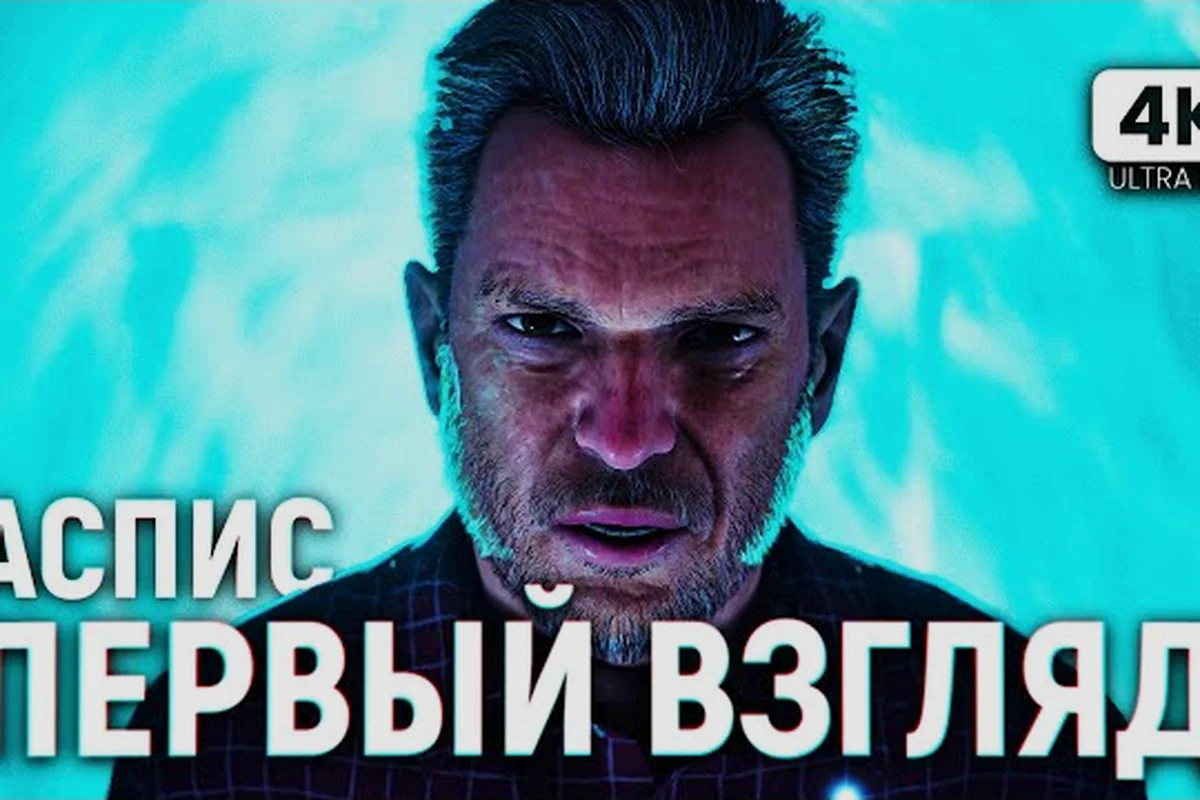
The ASPIS demo vs full game comparison matters because the demo is an extended prologue, while the release adds the complete story arc and both endings. It offers a useful preview of the setting, interface, combat, and accessibility adjustments before you commit to the full experience.
ASPIS Demo vs Full Game: What the Demo Covers
The 2025 demo was designed as an extended prologue rather than a compressed excerpt from the finished campaign. Dream Wire Games advertised up to two hours of gameplay, giving players time to encounter the Institute of Cybernetics, the central experiment, and the unusual rules governing the system. This makes it a meaningful trial of the game, but not a complete representation of every story or gameplay system in the release.
The demo introduces Andrey, an engineer whose deceased wife is Anna and whose daughter is Liza. Players also encounter the six volunteers connected to the experiment and the systems that place them inside a reimagined USSR in 1987. The official ASPIS store page on Steam describes the full game as following that experiment far beyond its intended duration, with time moving much faster inside than outside.
| Feature | 2025 ASPIS Demo | Full ASPIS Release |
|---|---|---|
| Recommended length | Up to two hours | No official completion estimate |
| Story position | Extended prologue | Complete campaign |
| Story outcome | Introduces the premise and experiment | Includes one final choice and two endings |
| Core interaction | PEP-01, Energy X, exploration, and basic combat | Full progression through the connected story |
| Interface updates | Revised flashlight brightness, circular equipment menu, and adjusted X-sphere capture | Final behavior determined by the release build |
| Languages | Demo update added seven text localizations | English, Russian, French, Ukrainian, and Japanese listed for the release |
| Platforms | Presented through Steam during its demo period | Released on Steam and VK Play |
Because the demo focused on the institute and its rules, it is particularly effective for judging presentation and atmosphere. It also lets players test the movement, camera, and interface changes recorded in the official announcement feed. The broader ASPIS game guide can help you interpret those early systems without confusing demo features with final-game content.
What the demo reveals about the premise
The prologue establishes that ASPIS is not a conventional simulation. Its name expands to Autonomous System for Predicting Historical Events, while the story places familiar Soviet-era locations in a context where ordinary laws no longer reliably apply. That distinction matters because the demo is designed to make the rules strange without immediately explaining every consequence.
The developer based several locations on reference images of Soviet-era research sites, industrial plants and storage buildings. This environmental approach gives the prologue a grounded appearance before the impossible elements of the experiment become apparent. It also explains why the demo is more than a basic combat sampler: players are being introduced to a place that initially resembles familiar history.
What remains exclusive to the full game
The major difference is scope. The finished release continues beyond the demo’s extended introduction and reaches the campaign’s central choice, where the story branches into two endings. The official material does not publish a chapter count, collectible count, damage values, or estimated completion time, so anyone claiming a precise full-game length should treat that as unconfirmed.
The release also expands beyond the introductory equipment and interaction patterns seen in the demo. Combat includes a Makarov pistol and melee options, with ammunition and other resources found while exploring. The Guardian is a particularly important difference for preparation because official information specifically warns that it cannot simply be shot.
Full ASPIS Release Features and Story Scope
The full game is the definitive version of the experience previewed by the demo. It retains the Soviet research setting, the PEP-01 device, astral windows, and the central mystery surrounding the six volunteers, but it carries the experiment through its intended narrative resolution. The longer journey is where the difference between learning the rules and facing their consequences becomes clear.
Official information explains that the experiment was expected to last days, yet well over a year elapses inside the system. The Director leads Andrey deeper while promising answers, and the Cat helps him understand the place. These characters and situations make the full campaign more than an extended survival scenario; they turn the system itself into a mystery with personal stakes.
| Story element | What the demo emphasizes | What the full game adds |
|---|---|---|
| Andrey | His role as an engineer and his connection to Anna and Liza | The broader consequences of his final decision |
| The volunteers | Their connection to the experiment and abnormal surroundings | The system’s effect on their journey |
| The Director | Early hints about deeper areas | Continued guidance that promises answers |
| The Cat | Initial help with local rules | More sustained involvement in interpreting the environment |
| Astral windows | The PEP-01’s connection to layered reality | Their role in the complete narrative |
| The ending | No campaign resolution | One choice leading to two distinct endings |
The two-ending structure is the clearest content difference between demo and release. The demo may establish the problem, but it cannot deliver the full outcome promised by the official store page. This is also where the ASPIS demo vs full game comparison shifts from features to expectations: the demo tests the experience, while the full release resolves the experiment and its central choice.
Prologue versus complete campaign
The full campaign is not simply the demo with additional rooms. It expands both the narrative questions and the consequences of exploring a reality where conventional assumptions can fail. The demo introduces the institute and the premise, whereas the release allows the player to experience the distortion over a much longer span of in-game time.
That difference affects the intended atmosphere. Early encounters can be evaluated as a sampler, but the full game places those same mechanics inside a sustained story about perception, history, and responsibility. The achievement list includes objects such as a packing machine, the Devil’s cage, and a freed prisoner at the edge of the island. These references are not a complete roadmap, but they confirm that the release contains optional discoveries beyond the opening setup.
Why the Ending Promise Shapes the Full Campaign
The promise of one choice and two endings is central to the full campaign. It means the final sequence may reflect earlier exploration, relationships, and the player’s interpretation of the system. The official material does not explain which decisions determine the outcome or provide a chapter-by-chapter breakdown, so detailed claims about requirements should not be treated as confirmed.
Players who finish the demo should therefore avoid assuming they have seen the full emotional and narrative scope. The demo is an extended prologue, while the full game is a complete story with a consequential conclusion. If you want a spoiler-free understanding of the setting before playing, the Aspis horror game overview explains the core premise without walking through the ending.
ASPIS Accessibility Options and Technical Improvements
The clearest published technical changes appeared during the 2025 demo period. Dream Wire Games increased the maximum field of view to 120 degrees, added separate mouse inversion for both the horizontal and vertical axes, made the pause function actually stop the game, displayed task text directly on the screen, and allowed players to choose the episode they started from. These updates made the demo more accommodating, although they are not a complete accessibility specification.
This distinction is important for the aspis accessibility options search. The official material confirms specific display and input adjustments, but it does not publish a comprehensive settings list, a full keybind table, difficulty presets, subtitle descriptions, color-filter options, or narration controls. Accessibility should therefore be evaluated from the available build rather than inferred from a marketing label.
| Published feature | Practical purpose | Verified status |
|---|---|---|
| Maximum 120-degree field of view | Expands the visible area | Confirmed in demo technical updates |
| Separate X and Y mouse inversion | Allows axis-specific control | Confirmed in demo technical updates |
| Functional pause | Stops play when the pause screen opens | Confirmed in demo technical updates |
| On-screen task text | Keeps objectives visible during play | Confirmed in demo technical updates |
| Episode selection | Lets players choose a starting point | Confirmed in demo technical updates |
| Difficulty presets | Potential preset-based accessibility tool | Not published in official material |
| Complete keybind and subtitle list | Full control customization reference | Not published in official material |
The Advanced Subtitle System is another notable tool developed for the game. Its purpose was to align voice, subtitles, and scene events, which can improve readability when information is delivered through several channels at once. However, an advanced timing system does not by itself prove that every subtitle setting, color option, or spoken cue is customizable.
Display and comfort controls
Field of view and mouse inversion are the most concrete published comfort adjustments. A wider field of view can make the camera easier to understand, while separate axis inversion gives players more control over movement preferences. These are meaningful additions, but the official announcements do not say how either setting affects the full campaign’s final balance or interfaces.
Because the demo received several technical updates, early impressions may describe an older build. Community reports about camera behavior, inversion, or performance should be labeled accordingly and checked against the current release. Our verified ASPIS controller support guide provides a focused reference for that distinction without presenting unverified key combinations as official facts.
Subtitle and interface support
The subtitle timing tool demonstrates attention to the relationship between dialogue and visual events. The task-display update similarly supports accessibility by reducing the need to memorize every objective immediately after hearing it. The equipment menu also changed to a circular format, while the flashlight received a brightness adjustment, offering more direct control over what the player can see.
The release store page lists English, Russian, French, Ukrainian, and Japanese. The demo update separately added seven text localizations. Those figures should not be treated as the same list, because the full-game store listing is the better source for release-language support.
ASPIS Demo Versus Full Game: Content and Feature Checklist
The most reliable way to compare the versions is to separate confirmed content from common assumptions. Official announcements document the demo, while the store page and achievement list describe the release. Neither source publishes a complete settings list, a full episode count, numerical balance data, or a completion estimate, so a useful comparison must acknowledge those gaps.
| Question | Best-supported answer |
|---|---|
| Is the demo the full story? | No. It is an extended prologue. |
| Does the demo show the ending? | No. The full campaign reaches one choice and two endings. |
| Did the demo receive updates? | Yes, including display, input, menu, pause, and task-text changes. |
| Are all final settings known? | No. Official material does not provide a comprehensive settings list. |
| Does the release support more languages than the demo? | The release lists five languages; the demo update used a separate seven-language localization note. |
| Is the Guardian ordinary shooting practice? | No. Official information says it cannot simply be shot. |
| Is a full-game completion time available? | No official estimate is published. |
| Can the demo prepare players for every release mechanic? | Partly. It shows core systems, but not the complete story, every interaction, or both endings. |
This checklist matters when reading an aspis wiki or community comparison. A useful wiki entry should distinguish demo notes from full-release information, while a community guide may add observations that are not in official announcements. When those sources conflict, the current Steam build and developer announcements should take priority.
A practical decision guide
Choose the full game if you want the complete narrative, the final choice, both endings, and the broader set of interactions that follows the prologue. It is also the only version that can answer questions about campaign length, later enemy encounters, or the complete equipment experience.
Choose the demo if you want to evaluate the atmosphere, test the interface, or experience the premise at no cost. The demo is substantial, but it is still best understood as a prologue with a limited endpoint. Its technical updates also make it a reasonable way to assess the camera and controls before buying the release.
What to verify in your own build
Players should check the pause screen, field-of-view control, mouse inversion, subtitle behavior, and objective display on the version they are actually using. The official announcement feed is the primary record of changes, while community reports can help identify issues that still need official confirmation.
For broader setup advice, the ASPIS system requirements overview can help with hardware expectations. Avoid relying on unofficial lists for damage numbers, collectible totals, or a complete episode count; those details are not published in the verified material.
Practical ASPIS Tips Before Choosing a Version
The demo is most useful when approached as a test rather than a miniature campaign. Observe how clearly the game communicates objectives, whether the movement and camera controls feel comfortable, and whether the environmental sound or subtitle timing supports comprehension. These checks matter because the release builds on the systems introduced during the prologue.
Start by testing the flashlight brightness in a darker area. Then try the wider field of view and confirm that the camera remains comfortable during quick turns. Separate X and Y mouse inversion should also be checked if you prefer nonstandard mouse movement. These practical steps are more meaningful than generic advice because they correspond to the technical improvements actually documented by the developer.
| Test | What to observe | Why it matters |
|---|---|---|
| Flashlight | Whether scene detail remains visible at different brightness levels | Affects navigation in dark locations |
| Field of view | Whether nearby and distant objects are easier to read | Influences camera comfort and situational awareness |
| Mouse inversion | Whether movement responds correctly on each axis | Helps identify the correct personal configuration |
| Pause menu | Whether play stops immediately | Confirms the demo update works in your build |
| Task text | Whether current objectives remain readable | Reduces the need to remember instructions |
| Subtitle timing | Whether speech, text, and scene events stay synchronized | Improves comprehension during dialogue-heavy moments |
Look for the PEP-01 interaction, astral-window transitions, and resource placement while exploring. Since the full game is more focused on consequences rather than a standalone shooting challenge, these interaction details offer a better preview than combat alone. The official material mentions a Makarov pistol, melee attacks, and ammunition found in the environment, but it does not provide damage values or a complete weapon list.
Treat the demo as a prologue
Avoid reading the demo’s endpoint as a conclusion to the story. Its purpose is to establish the institute, the volunteers, and the abnormality of the system. The release extends that foundation and eventually arrives at a choice with two outcomes. Completing every available demo task still leaves the central campaign unresolved.
If you enjoy slow exploration and the gradual reveal of the setting, the demo is a useful test of tone. If you want immediate access to every ending, the full release is required. This makes the aspis demo vs full game decision less about technical quality and more about whether you prefer a curated preview or the complete experience.
Check information against reliable sources
Official announcements are strongest for technical changes, the Steam store page is strongest for release features and language support, and the achievement list is useful for confirming particular discoveries and the existence of both endings. Community sources can provide firsthand experiences, but their claims should be described as player reports unless the developer has confirmed them.
The locked keyword set includes aspis tips, aspis guide, and aspis wiki, but these terms should never excuse invented details. There is no verified official list of damage values, difficulty options, collectible counts, save rules, or keybinds. When those details matter, inspect the current build and official documentation rather than repeating unsupported community claims.
Launch Information and Final Comparison
ASPIS launched on Steam and VK Play on October 23, 2026, according to its official store page. Dream Wire Games developed and published the game after nearly six years of work. The release remained in the Soviet Union in 1987 and continued the story of Andrey, the six volunteers, the PEP-01 device, and the system whose accelerated passage of time transforms the experiment.
The launch details settle the central comparison. The demo was an extended prologue offering up to two hours, followed by technical improvements to display, input, menus, pause behavior, and task text. The full game adds the complete narrative, the final choice, two endings, and a broader continuation of the Institute storyline.
| Final consideration | Demo | Full game |
|---|---|---|
| Best use | Previewing tone and testing controls | Playing the complete story |
| Story resolution | None | One choice and two endings |
| Official launch status | Released as a prior demo | Available on Steam and VK Play |
| Technical notes | Multiple improvements documented | Final behavior depends on the release build |
| Best value for | Curious players and technical testers | Players seeking the complete ASPIS experience |
| Unresolved details | Completion time, total episodes, full settings | Same, because official material does not publish them |
The aspis demo vs full game choice ultimately comes down to scope. The demo is substantial enough to reveal ASPIS’s identity, but the full release is the only way to experience its complete arc and endings. It also offers the most reliable way to judge the final interface, localization, and overall pacing.
Frequently Asked Questions
Is the ASPIS demo the same length as the full game?
No. The 2025 demo offered up to two hours of gameplay and functioned as an extended prologue. The full release continues through the complete story, ending with a final choice and two possible endings. Official sources do not provide an exact completion time for the full campaign.
Does the ASPIS demo show every accessibility option in the release?
No complete list has been published. Demo updates confirm a maximum 120-degree field of view, separate X and Y mouse inversion, functional pause, on-screen task text, and episode selection. The release also uses a custom subtitle timing tool, but difficulty presets, every subtitle control, and a complete keybind list remain undocumented.
Should I buy the full ASPIS game after finishing the demo?
If the demo’s atmosphere, exploration, and interface suit you, the full game is the logical next step. It continues the experiment rather than ending where the demo stops, adds later story content, and provides access to both endings. First confirm that the core prologue experience appeals to you, because the demo cannot reveal the entire campaign.
Is the Guardian easier to defeat in the full game than in the demo?
Official material does not provide enough information to support that comparison. The store page specifically states that the Guardian cannot simply be shot, so conventional firearm damage should not be treated as a guaranteed solution. No verified damage values, weakness details, or strategy checklist have been published, and community accounts should be treated as reports rather than confirmed mechanics.
What is the best way to use the demo before buying ASPIS?
Test the camera, mouse inversion, flashlight brightness, pause behavior, task text, and subtitle synchronization. Then examine whether the exploration and story presentation hold your attention. These checks are more useful than judging only combat because the release is primarily a story-driven experience built around the Institute, the volunteers, and the system’s distorted rules.