
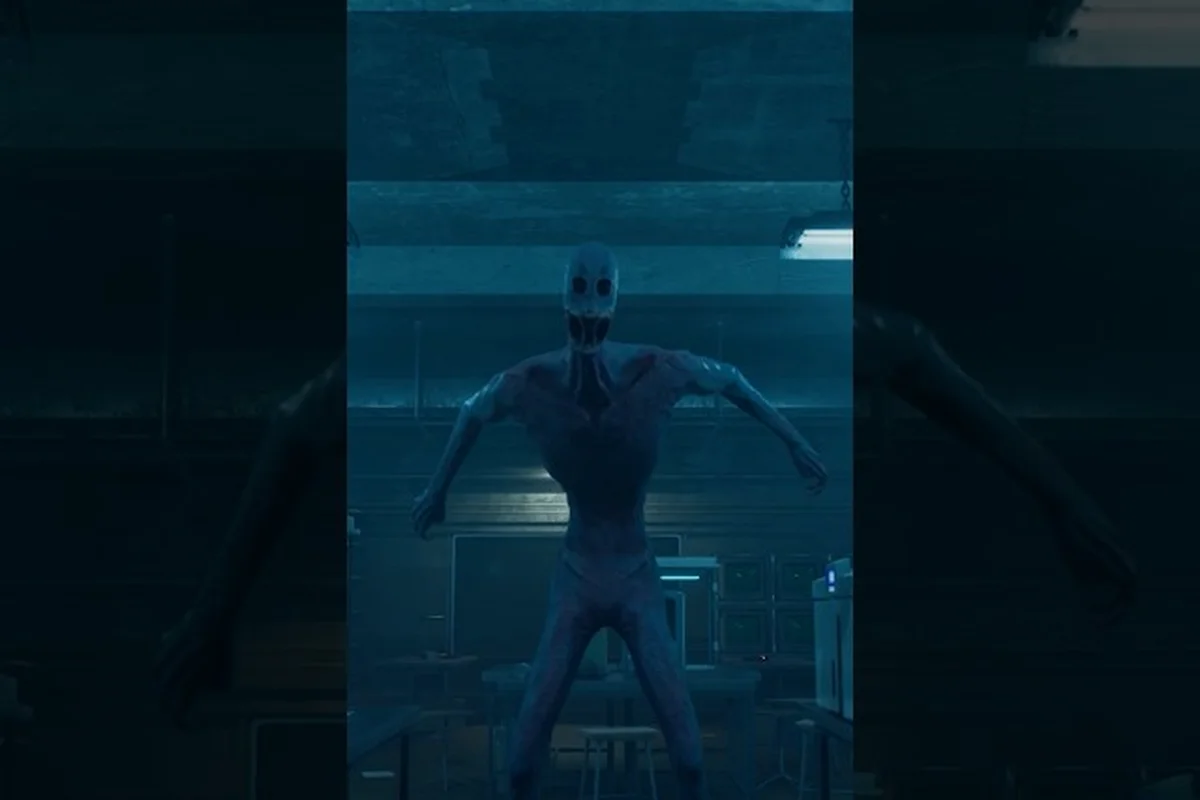
ASPIS horror game rewards patience, observation, and smart resource use in its tense USSR setting. This spoiler-free guide explains the systems that matter, the beginner mistakes that can spoil a first run, and how to approach encounters without losing the story’s sense of dread.
Understanding the ASPIS Horror Game Setting
ASPIS is a narrative-led first-person horror title developed and published by Dream Wire Games. The story begins in an alternate-history version of the USSR in 1987, where engineer Andrey becomes involved in an experiment connected to six volunteers, the Institute of Cybernetics, and unusual OGAS terminals. The full title means Autonomous System for Predicting Historical Events, but the acronym alone does not explain the disturbing world waiting inside the system.
The official ASPIS page on Steam describes the situation that gives the aspis soviet horror its identity. Andrey is grieving the death of his wife, Anna, while caring for his daughter, Liza. His attempt to understand the technology leads into a place where ordinary laws no longer behave as expected. This is not merely a haunted Soviet building; technology, grief, and altered reality are tightly connected.
That setting changes how you should interpret the game’s environment. Period machinery, institutional rooms, abandoned facilities, and supernatural phenomena all carry equal visual weight. A machine may appear ordinary until its purpose becomes clear. A strange terminal may feel like a puzzle device before it becomes a doorway. The Soviet backdrop therefore works as both historical atmosphere and part of the mystery.
| ASPIS story element | What it contributes to the experience | Spoiler-free relevance |
|---|---|---|
| USSR in 1987 | Establishes a Cold War-era atmosphere of decay, secrecy, and industrial design | Read environmental details for clues |
| Andrey’s family background | Gives the experiment emotional weight | Notice how grief changes reactions to the system |
| Six volunteers | Connects the main cast to the experiment | Listen carefully to testimony and dialogue |
| Institute of Cybernetics | Frames the location as a research facility | Treat technology as a recurring source of danger |
| OGAS terminals | Suggest an experimental control system | Interact cautiously and read every prompt |
| Astral windows | Introduce movement between altered layers of reality | Expect exploration to shift in unsettling ways |
Reading the Alternate-History Soviet Atmosphere
The Soviet environment is built from photographs of real research institutes, factories, and warehouses, according to the developer’s announcements. This gives locations a grounded quality, but their familiar geometry may still encourage you to make unsafe assumptions. A locked room might contain a conventional mechanism, while an impossible corridor may be part of the supernatural rules.
Look for period industrial detail: worn control panels, heavy machinery, improvised labels, and institutional warning signs. These details can clarify how a space once functioned. At the same time, treat every object as potentially dual-purpose in the aspis ussr setting. The game’s central technology is designed to bridge realities, so ordinary objects may become relevant again in an altered context.
The presentation also supports careful observation. The official Steam material mentions voice dialogue, subtitles, and a custom system for synchronizing them with scene events. Listening can therefore provide information that a hurried player misses. Dialogue, machine sounds, environmental noises, and changes in behavior form a combined puzzle rather than separate decorative layers.
Balancing Story Discovery and Survival
ASPIS places exploration and resource management in the same loop. You can inspect locations, search for supplies, solve environmental obstacles, and speak with characters, but the world can become dangerous while you do so. A careful first hour is not about avoiding every interaction; it is about understanding which situations deserve your time and ammunition.
The game includes a Makarov sidearm and close-range strikes, with rounds and supplies collected during exploration can be found through exploration. However, firing is not a universal answer. The official description explicitly notes that the Guardian cannot simply be shot, which signals that combat has limits. The same broader principle applies elsewhere: brute force may stop one threat without resolving the system’s deeper problem.
| Exploration approach | Immediate benefit | Potential mistake |
|---|---|---|
| Search each usable area | Improves access to ammunition and other supplies | Rushing off without checking side rooms |
| Read terminals and notes | Clarifies the experiment and local procedures | Dismissing text because exploration feels slow |
| Observe doors and machines | Helps distinguish puzzles from threats | Forcing every device immediately |
| Keep melee available | Provides a fallback when ammunition is scarce | Treating the pistol as the only solution |
| Revisit known routes | Helps you understand shortcuts or altered connections | Assuming a route remains unchanged |
A broader overview of the game’s progression can be found in the ASPIS game guide, while this article focuses on the habits that make a first run easier without revealing major plot developments.
Core Systems Every New Player Should Recognize
The ASPIS horror game uses a small set of documented tools: the PEP-01 device, Energy X, astral windows, terminals, environmental locks, and limited combat resources. Understanding their relationship gives you a reliable decision process. The goal is not to solve every mystery early; it is to recognize what kind of interaction each screen or object is asking for.
The PEP-01 interacts with Energy X and opens astral windows between layers of reality. This makes it more than a conventional inventory gadget. It appears to be a bridge between the ordinary facility and the strange spaces beyond it. When progress depends on crossing that boundary, the interface may demand attention rather than haste.
Reading PEP-01 Prompts Carefully
The PEP-01 should be treated as a contextual tool, not a button whose result can be guessed. The interface may present information tied to the current layer, object, or condition. A prompt that seems unhelpful can still reveal which nearby element matters, while a successful interaction may change what can be examined next.
A practical method is to pause before confirming and note three things: the current objective, the objects mentioned by the interface, and whether Energy X appears to be required. This creates a mental checklist without turning the game into a walkthrough. It also makes repeated observations less likely to feel like blind experimentation.
Managing Energy X and Astral Windows
Energy X and astral windows are central to ASPIS’s reality-altering premise. The important beginner lesson is to separate opening a route from understanding where it leads. Astral windows may expose new spaces, connect otherwise separate areas, or make familiar locations behave differently. The environment should be reassessed after each crossing.
| Situation | Better response | Risk of rushing |
|---|---|---|
| An astral window becomes available | Observe the nearby area and current objective | Entering without noticing a useful supply |
| A familiar route changes | Recheck landmarks and exits | Assuming the old path remains reliable |
| Energy X is required | Search for the relevant interaction point | Missing clues near the device |
| A new area opens | Identify its purpose before leaving | Wandering without recording progress |
| A threat blocks access | Consider avoidance or melee first | Spending scarce ammunition immediately |
Reality shifts should be treated as new spaces, even when they visually resemble locations you have already visited. Familiar signs, doors, and machinery may retain their shape without preserving the same rules. Slowing down for one short environmental check can prevent a costly mistake later.
Interacting With OGAS Terminals
OGAS terminals are part of the technological frame surrounding the story. They suggest a system capable of connecting participants, decisions, and events, but the interface can be hostile. Read prompts as instructions, not flavor text, and make sure you understand whether a command is reversible.
A useful rule is to avoid experimenting with every command while another character is nearby. Conversations and environmental systems may carry consequences for the narrative, even when the game does not present them as conventional quest chains. Since this is an aspis spoiler free guide, it deliberately avoids naming specific terminal sequences or solutions. The reliable method is simple: follow the current objective, test only what the prompt requests, and observe the result.
Surviving the First Hours Without Wasting Resources
A strong first run depends on treating every supply as a budget. ASPIS does not publish official ammunition capacity, damage values, stamina rules, or enemy statistics, so a precise “best” loadout cannot be claimed from official material. The practical approach is to preserve what you find and use it only when a threat cannot be avoided or the current objective requires confrontation.
The Makarov pistol is the only firearm explicitly identified in the official store material. That does not mean it is a permanent solution; it means the first plan should not assume unlimited firing power. Because the Guardian resists conventional shooting, a cautious player will keep distance, look for a safer interaction, and preserve melee as a fallback.
Building a Practical Resource Routine
The following routine supports an aspis spoiler free guide because it focuses on decision habits rather than hidden locations or puzzle answers. It works alongside the ASPIS complete guide when you need broader help with the opening stretch and narrative flow.
-
Survey before collecting: Scan the room for exits, threats, and interactable objects before opening containers or terminals.
-
Prioritize immediate relevance: Carry only what appears useful for the current route, though official material does not publish carry weight or inventory rules.
-
Separate exploration from confrontation: If a room can be searched safely, gather information before drawing a weapon.
-
Remember resource locations: The world may change after a reality shift, so note unusual doors, locked systems, and connected spaces.
-
Avoid spending under pressure: An enemy seen briefly is not always a reason to empty the pistol at the moment it appears.
-
Keep an escape option: Before crossing an astral window or opening a consequential terminal, identify a return route.
| Encounter type | First response | Why it helps |
|---|---|---|
| Distant unexplained threat | Observe and reposition | May reveal a pattern or safer route |
| Blocking physical enemy | Consider melee, escape, or limited fire | Conserves ammunition for unavoidable danger |
| Environmental hazard | Identify the device or rule controlling it | Prevents repeated damage and wasted items |
| Supernatural presence | Look for an interaction rather than assuming combat | Some threats cannot be solved by shooting |
| Locked passage | Examine the mechanism and surroundings | Puzzle locks often reward careful inspection |
Keeping the Melee Option Alive
Melee combat gives you a meaningful option when ammunition is limited, but it should not become a reckless default. Approach is more important than aggression because a horror encounter may punish repeated exposure. Look for an opening, strike only when the route is clear, and retreat if the space becomes unsafe.
The presence of melee also changes how you read the environment. A room with a table, narrow aisle, or heavy machinery can become a defensive advantage without relying on a supernatural weakness. At the same time, this is not a confirmed “best stance” system, and official material provides no stance list or damage formula. Treat the environment as part of your tactical choices, not as a guarantee.
Learning When Combat Is the Wrong Tool
The official warning that the Guardian cannot simply be shot is the clearest example of ASPIS’s design philosophy. Combat exists, but some obstacles require a different category of response. A monster that behaves like an enemy may be a symptom of the environment, while a locked system may be a puzzle with no combat solution.
This distinction is crucial for the aspis ussr setting. The Institute and its technology are not just backdrops; they shape how danger manifests. Your equipment can address the creature in front of you, but only understanding the facility can address why you are facing it.
ASPIS Beginner Mistakes That Ruin First Runs
The most damaging aspis beginner mistakes are rarely caused by lacking a special strategy. They come from rushing, assuming every puzzle behaves like modern video-game logic, or treating exploration as optional. A spoiler-free first run feels better when uncertainty creates suspense rather than confusion.
Mistake One: Rushing Through Every New Area
New locations are information-rich, and ASPIS builds its horror through changes in atmosphere and routine. Moving immediately from one doorway to the next can cause you to miss environmental clues, dialogue, or supplies. It can also leave you without a clear understanding of where the current objective points next.
A slower opening can still feel tense. Stand near the threshold, look around, listen, and identify what has changed. The goal is not to search every surface; it is to notice meaningful interactions. Official material does not publish a quest-marker system or a complete map, so environmental awareness is the most dependable navigation tool.
Mistake Two: Treating the Setting Like a Typical Shooter
The Cold War-era research setting can initially resemble familiar survival-horror locations, but the technology changes the rules. The PEP-01, Energy X, and astral windows indicate a system that manipulates perception and space. Assuming every enemy responds to bullets or every corridor remains stable can lead to wasted resources.
| Beginner assumption | Better principle | Practical result |
|---|---|---|
| Every threat can be shot | Some threats require another interaction | Preserves ammunition for real combat |
| Every locked door uses the same mechanism | Each obstacle may represent a different system | Encourages contextual problem-solving |
| A familiar room will stay unchanged | Reality shifts can alter what is accessible | Reassesses spaces after transitions |
| The loudest objective is always urgent | Exploration may reveal a necessary condition | Avoids missing hidden prerequisites |
| More equipment is always better | Official rules for carry weight are not published | Avoids relying on unsupported inventory assumptions |
Mistake Three: Ignoring Dialogue and Environmental Clues
ASPIS uses dialogue, voice acting, subtitles, and environmental storytelling to establish the stakes around the six volunteers and the experiment. The story is not decoration around a series of mechanical obstacles. It provides context for strange behavior, explains relationships, and may clarify what the player is expected to notice.
Listen for changes in tone, contradictions, and references to unfamiliar devices. When text or dialogue points toward a location, follow up carefully rather than dismissing it as optional exposition. This approach supports a spoiler-free guide because it teaches attention rather than predetermining the answer.
Mistake Four: Saving Only for Major Encounters
Saving conservatively until a boss-like threat can make an early mistake fatal. No official save rules or checkpoint schedule are published, so the safest player mindset is to expect ordinary encounters to matter too. Treat every meaningful battle as a potential loss of ammunition, health, or opportunity.
Because exact recovery rules are undocumented, avoid making claims about autosave behavior. Continue cautiously after interactions, save when the available option appears, and do not assume a failed attempt will reset the encounter at no cost. If you want more information about what is currently known, the ASPIS save system overview separates documented information from community reports.
Mistake Five: Assuming Every Loud Moment Requires Immediate Violence
Noise attracts attention, but responding with a weapon is not always the best interpretation. Some threats can be avoided, observed, or handled through a special interaction. Others may punish repeated aggression. Before firing, ask whether the nearby environment offers a safer answer.
This habit also improves story comprehension. If a strange figure is connected to the experiment, observing its behavior can reveal more than a brief pistol exchange. Conservation and curiosity often produce the same positive result: more information with fewer resources spent.
A Calm Checklist for a Spoiler-Free First Run
A spoiler-free first run should leave you informed about the world without revealing later revelations. Use this checklist before and during major interactions. It is designed around documented mechanics rather than unsupported assumptions about exact objectives, enemy lists, or puzzle solutions.
| Moment | Check before acting | Best information source |
|---|---|---|
| Entering a new facility area | What changed, and where is the exit? | Environment and sound |
| Using the PEP-01 | Which prompt and nearby object matter? | On-screen interface |
| Opening an astral window | Is the route clear on the other side? | Threshold and surrounding space |
| Using an OGAS terminal | What exact instruction is displayed? | Terminal prompt and dialogue |
| Entering combat | Can the threat be avoided or redirected? | Nearby obstacles and behavior |
| After a reality shift | Which landmarks and resources remain reliable? | Direct observation |
| Before opening a container | Is another threat or hazard nearby? | Room survey |
Observe, Compare, Interact, Reassess, Record
For almost every important object, use the same five-step approach: observe, compare, interact, reassess, record. Observe the object and its surroundings. Compare it with the current objective or previous interactions. Interact with the relevant control rather than experimenting randomly. Reassess the room after the result. Record what changed, especially when a doorway, terminal, or machine behaves differently.
This loop is particularly useful for the ASPIS horror game because the setting can be stranger than its retro-industrial appearance suggests. It keeps you grounded without turning the guide into a sequence of prescribed solutions. If the game explicitly says to capture an X-sphere, use the button rather than holding it, as the developer’s technical announcement notes. Small input details can prevent confusion and wasted experimentation.
Preparing for Playback or a Shorter Session
The 2025 demo offered an extended prologue with up to two hours of gameplay, and technical updates added options including episode selection, separate X- and Y-axis mouse inversion, and a maximum field of view of 120 degrees. These are documented demo features, not proof of a complete settings list for the full release. If you are deciding whether the demo reflects the full experience, the demo and full-game comparison provides a useful context.
For a first session, prioritize subtitle readability, sound clarity, and comfortable mouse movement. The developer also built a custom subtitle system to align spoken language, written text, and scene events, so do not dismiss subtitles as secondary information. They may clarify dialogue that is difficult to parse during tense moments.
Frequently Asked Questions
What is ASPIS about?
ASPIS is a first-person narrative horror title set in an alternate-history USSR in 1987. Engineer Andrey encounters an experiment involving a device called the PEP-01, Energy X, astral windows, six volunteers, and a research institute. The premise blends Soviet-era industrial settings with supernatural reality shifts, grief, technology, and one final choice leading to two endings.
Is ASPIS a Soviet horror game with shooter combat?
Yes, but calling it only a shooter misses its central design. The setting is an alternate-history USSR in 1987, while combat includes a Makarov pistol and melee attacks. The official material also states that the Guardian cannot simply be shot, indicating that some threats require alternate interactions. Exploration, reading, listening, and understanding the facility are therefore as important as fighting.
What should a beginner focus on during the first hour of ASPIS?
Focus on learning the relationship between the PEP-01, Energy X, astral windows, terminals, and changing spaces. Read prompts, listen to conversations, check rooms before opening containers, and avoid firing whenever a safer response may exist. The objective is not to solve every mystery immediately; it is to learn how the environment communicates and to avoid wasting ammunition on avoidable threats.
Can you beat ASPIS without using the pistol?
The official material confirms that melee combat exists, but it does not publish a no-gun completion requirement or a weapon-usage percentage. Some enemies, particularly the Guardian, may require solutions other than shooting. Whether every encounter can be completed through melee and avoidance alone is not officially confirmed, so a cautious loadout should preserve both options.
What mistakes should players avoid in a spoiler-free ASPIS playthrough?
Avoid rushing, ignoring dialogue, treating every threat as a conventional enemy, and saving resources only for major battles. Reassess locations after reality shifts, note how terminals respond, and search before entering a dangerous room. These habits make the aspis horror game easier to understand without revealing puzzle solutions, story developments, or either ending.
The best approach to the ASPIS horror game is patient observation backed by practical preparation. Learn how the PEP-01 and astral windows change the space, preserve the Makarov pistol and melee options, read the Soviet research setting for clues, and let conversations guide the story. With those habits in place, even a spoiler-free first run can deliver the tense exploration and layered mystery that define ASPIS.