
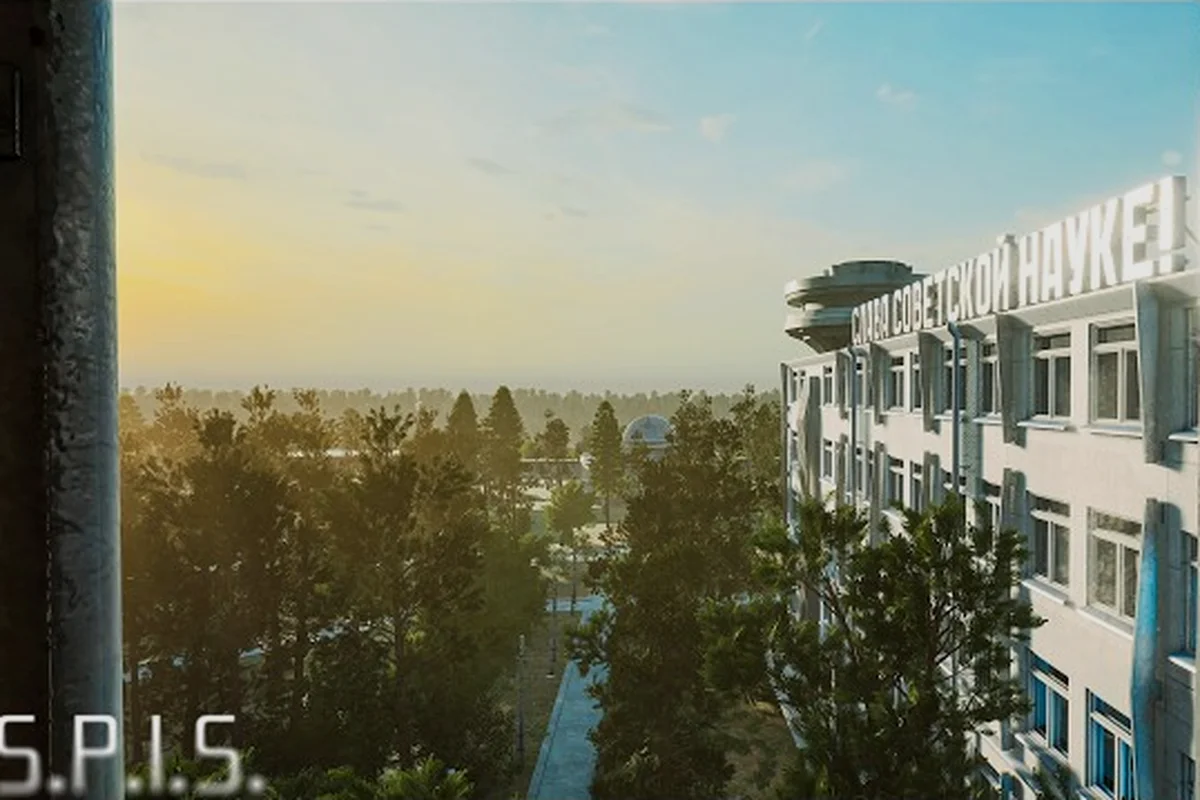
OGAS is the terminal network through which ASPIS delivers records, documents, and experimental material. The official store page describes the terminals as part of the interface, and developer announcements confirm the pre-launch OGAS 2.0 rebuild, but neither source explains the network's full technical design. This guide separates those published facts from readings of the archive's gaps.
ASPIS What Is OGAS? The Terminal Network's Place in the Story
ASPIS What Is OGAS? is best understood as the game’s network of terminals used to expose records, documents, and experimental material to the player. Its purpose extends beyond a simple computer interface: OGAS helps connect the Institute’s 1987 experiment, the accelerated passage of time, and the strange worlds reached through astral windows. The rebuilt OGAS 2.0 presentation makes that connective role clearer by presenting key information as a deliberate, interactive archive rather than a sequence of disconnected notes.
The official Steam announcement feed records the terminal rework in more detail.
OGAS as the Institute’s Experimental Interface
OGAS terminals are the principal way ASPIS delivers story information and puzzle material. The official game description identifies them as part of the interface, while development announcements confirm that the system was redesigned as OGAS 2.0 before release. In practical terms, the terminals are where a player can approach the project through its records: who joined the experiment, what happened to the volunteers, and how the Institute understood the places beyond ordinary reality.
The name has a specific historical foundation. ASPIS stands for Autonomous System for Predicting Historical Events, an experimental project associated with the Soviet-era Institute of Cybernetics. The 1987 setting is therefore not merely decorative; it places the game within a reimagined USSR during a period when cybernetics, state research, and computing held a complicated cultural and institutional position. A broader account of the ASPIS project and its 1987 context helps establish why the system’s interface and institutional atmosphere matter.
The important distinction is between the historical framework and the game’s unexplained events. Official material identifies Andrey, six volunteers, the Institute, and OGAS terminals, but it does not fully disclose the experiment’s mechanism, its final result, or whether the experiences inside the system are simulations. As a result, the terminals should be read as evidence within the fiction, not automatically treated as proof of a real-world digital afterlife.
What the terminal network communicates
The terminal network appears to serve four interconnected narrative functions. Record access, experimental logs, environmental orientation, and archive reconstruction each transform a distinct category of OGAS data into a larger investigative puzzle: documents reveal institutional decisions, the six-volunteer experiment tracks experiential changes, unusual locations contextualize the world beyond the Institute, and fragmented accounts establish a shared chronology. Together, these functions let players cross-check Andrey’s encounters with the Cat against OGAS’s institutional records, exposing where omitted logs, conflicting timestamps, or incomplete observations require further exploration.
| Terminal function | Narrative contribution | What it helps the player evaluate |
|---|---|---|
| Record access | Presents documents, logs, and institutional information | What the Institute knew or concealed |
| Experimental log | Connects records to the six-volunteer experiment | How the group’s experiences changed over time |
| Environmental orientation | Names or contextualizes unusual locations and entities | Why the world beyond the Institute behaves differently |
| Archive reconstruction | Places fragmented accounts into a broader chronology | Which events belong together |
This structure matters because OGAS is not presented as an omnipotent narrator. It operates within the same world as Andrey, the Cat, and the other characters, and its information may be incomplete, damaged, or shaped by institutional priorities. The archive therefore has value not because it automatically provides answers, but because the gaps and contradictions can direct the player toward other evidence.
OGAS 2.0 and the pre-launch rework
Official Steam announcements document a pre-launch interface rework known as OGAS 2.0. The broader project behind the terminal update can be understood as a shift toward a circular interface for equipment selection, while related interface material was adjusted to make story and puzzle information more legible. Because the game presents OGAS as a story and puzzle surface, that redesign carries thematic weight: the system resembles a working instrument rather than a static menu.
The new version should not be treated as proof that the fictional Institute used any particular historical computer. The developer used real photographs of Soviet research institutes, factories, and warehouses to inspire locations, but that environmental design process is separate from the fictional network’s technical origin. The safest conclusion is that OGAS 2.0 is the modern presentation of a story-critical system whose exact construction remains mysterious.
Archive Lore, Audio Logs, and the ASPIS Lore Timeline
Archive lore becomes most useful when records are read as a sequence rather than as isolated collectibles. The ASPIS lore timeline begins with the Institute’s experiment in the Soviet Union in 1987, continues through the connection of six volunteers, and then extends into accelerated time inside the system. The official premise says the experiment was intended to last days, yet well over a year elapses internally, and none of the volunteers wakes after that period.
That discrepancy gives the archive its central tension. Chronology is not simply measured by clocks; it changes depending on where a person or record stands. A terminal can document an event that feels recent inside the system while placing it much later relative to the outside world. The network therefore acts as both a repository and a device for exposing temporal instability.
Placing records on the timeline
The following table presents the broad chronology supported by official material, separating the Institute’s 1987 prediction project, the preparation of the six volunteers, and Andrey’s first encounter with the PEP-01 from the astral-window phenomenon. It does not claim that every listed event receives a dated entry in Aspis, nor does the elapsed time inside the experiment by itself reveal its mechanism. The accelerated period, the volunteers’ failure to awaken afterward, and the choice that produces two endings remain connected as narrative consequences, but the underlying process behind the Institute’s prediction-oriented research—and the reason no volunteer returns—remains deliberately unresolved.
| Phase | Established event | Role in the interpretation |
|---|---|---|
| Pre-experiment | The Institute operates a prediction-oriented project in 1987 | Establishes the Soviet research setting |
| Preparation | Six volunteers become connected to the experiment | Defines the human group at risk |
| Entry | Andrey encounters the PEP-01 and the astral-window phenomenon | Begins the journey through layered reality |
| Accelerated period | well over a year elapses inside despite the experiment being planned for days | Demonstrates abnormal time flow |
| Afterward | None of the six volunteers has awakened | Creates an unresolved institutional crisis |
| Final decision | One choice leads to two endings | Frames the experiment’s meaning as consequential but not fully defined |
Aspis audio logs explained requires the same careful distinction between established fact and interpretation. Audio logs can supply voices, chronology, and environmental context, but the existence of a recording does not automatically make its speaker trustworthy. The archive may contain testimony, technical notes, institutional messaging, and fragments left by people trying to understand the system. Their reliability can vary according to who made the record and what they knew at the time.
A useful method is to separate each log into three layers: what the speaker directly reports, what the surrounding evidence confirms, and what the speaker merely assumes. That approach prevents a personal conclusion—such as calling the experience a simulation or a dream—from becoming an official answer simply because it appears in the terminal network.
Reading contradictions as intentional clues
The archive appears designed to reward comparison rather than passive collection. Differences in dates, terminology, and personal recollections can reveal who had access to the experiment, whether a record was edited, and which theory the Institute endorsed at a particular moment. The keeper of records function implied by the terminal design is therefore not about preserving every truth; it is about controlling the context in which surviving fragments are read.
For additional organization, the discussion of ASPIS documents, dimensions, and theories can help readers separate artifact-based evidence from fan interpretation. The document layer supplies the raw material, while the theory layer asks what the Institute may have mistaken for control.
Slavic Mythology, Lukomorye, and the World of Dreams
The imagery surrounding OGAS also draws on older Slavic traditions, although official material does not reduce ASPIS to a direct adaptation of a single folktale. References to unusual territories, thresholds, guardians, enchanted enclosures, and places where ordinary rules fail can evoke motifs associated with Slavic folklore. That influence is best described as thematic rather than definitive, because the game’s Institute, technology, and layered realities have their own narrative logic.
Aspis Slavic mythology should therefore be approached as a question of echoes. Names and images may resonate with folktales without proving that every character corresponds to a traditional figure. The same caution applies to interpretations involving the Lukomorye meaning within the game: a green branch, enchanted place, or boundary-crossing motif may allude to a story tradition without turning the plot into a retelling of that tale.
Myth as a lens on the Institute’s language
Folklore gives the game a vocabulary for experiences that official Soviet institutions would struggle to describe through technical categories alone. The Institute can label events as prediction, cybernetics, or a controlled experiment, while the volunteers encounter places that resemble myths. OGAS sits between those modes because it is simultaneously institutional hardware and a portal into a realm where familiar laws do not reliably apply.
| Framework | What it emphasizes | Strength as a reading tool | Important limitation |
|---|---|---|---|
| Institute science | Prediction, cybernetics, and experimental control | Explains why the system exists | Does not disclose its mechanism |
| Slavic folklore | Enchanted thresholds and unfamiliar rules | Illuminates imagery and atmosphere | Does not establish a one-to-one story mapping |
| Dream logic | Symbolic space, shifting context, and personal meaning | Helps explain subjective experience | Should not be treated as proof of simulation |
| Community interpretation | Patterns noticed across play | Generates useful questions | Requires clear attribution and verification |
The aspis world of dreams reading works best as a conceptual layer. Dream spaces can combine remembered places with symbolic threats, while dreams can reveal a character’s fears without literally depicting memory. The official site says ASPIS is not a simulation, so calling the entire experience a dream directly contradicts one published claim, even though dream imagery can still shape how Andrey interprets what happens.
OGAS as the threshold between systems
The Russian name OGAS is associated historically with a cybernetic computing initiative, while the broader name ASPIS expands into Autonomous System for Predicting Historical Events. In ASPIS, the interface is not only a machine through which the Institute watches reality. It is a threshold device that can expose layers, records, and spaces the Institute itself struggles to control.
That interpretation explains why the Cat helps Andrey learn the rules of the place, why the Director can lead him deeper, and why the six volunteers remain connected for so long. The network appears to have been designed to predict or contain events, but its deeper destination exceeds the Institute’s stated model. OGAS thus functions as both a promise of control and evidence of failure. To examine the visual and environmental side of this contradiction, the meaning of ASPIS’s red world and its layers provides useful context for distinguishing the archive from the strange territories it helps reveal.
How to Read OGAS Clues and Solve Terminal-Focused Puzzles
OGAS is most effective as a system of relationships. A terminal entry may point toward a location, a spoken fragment, a drawing, or an object encountered elsewhere in the Institute. The answer to a terminal-focused puzzle is rarely isolated in the interface itself; it often emerges when the player connects terminal information with exploration, dialogue, and visual evidence.
The official achievement list provides several examples of the kind of discoveries that reward this approach. Documented objectives include opening the KGB building’s combination lock, finding Evgeny Kotov in the tunnels, returning the Keeper’s Seal, locating a drawing inside the correct portal, and hearing a freed prisoner at the edge of the island. These examples demonstrate how a record, a place, and an action can meet. The achievements do not publish a universal lock code, so relying on one would exceed the verified material.
A reliable terminal-reading sequence
A repeatable sequence helps preserve context while preventing the ASPIS archive from becoming a string of disconnected notes. Work through each audio log in a fixed order—read the complete entry, identify unresolved names, distinguish commands from testimony, and note any implied location—then compare it with fragments recorded before and after it. This makes discrepancies in terminology or narrative perspective visible, while cross-referencing audio logs, archive lore, and the broader ASPIS story lets a later reference clarify an earlier designator without treating every terminal mystery as a self-contained puzzle.
-
Read the full entry first. Capture the speaker, date reference, named place, and requested action before interpreting isolated lines.
-
Mark unresolved names. Cross-reference people, locations, and organizations against the wider ASPIS story. An unfamiliar designation may connect a terminal to a physical discovery later in the journey.
-
Separate commands from testimony. A note can describe a rule, request an action, or express a belief, but these categories carry different evidential weight.
-
Follow the implied location. If a record mentions a route, a sealed place, or an unusual condition, revisit the relevant environment with that detail in mind.
-
Compare later and earlier fragments. Changes in language can indicate a shift in the Institute’s understanding or in a character’s mental state.
This method supports both exploration and deduction because each ASPIS audio log can function as two kinds of evidence: a clue to the next route or location, and a fragment of the Institute’s evolving account. For example, if one log records a sealed place under an unfamiliar name and a later entry repeats that designation in different language, the wording shift may reveal a character’s source, allegiance, or revised understanding. Comparing it with the broader ASPIS story explained supplies that context without requiring every terminal mystery to be solved in isolation, especially when the archive’s links to OGAS, Lukomorye, and the world of dreams remain uncertain.
A clue-to-evidence map
The following map is a reading framework rather than a walkthrough with guaranteed locations. It shows how terminal statements, personal names, repeated phrases, location references, object descriptions, and contradictions should be compared across the archive, audio logs, dialogue, and Lukomorye environments. For example, a name found in a terminal can be tested against a character route, while an object description may need to be matched to an inventory observation rather than treated as a quest marker. The aim is to build a defensible chain of OGAS evidence without imposing a fixed solving order on every puzzle.
| Clue type | First question | Best supporting evidence | Common mistake |
|---|---|---|---|
| Terminal statement | Who is speaking and when? | Matching dialogue or later record | Treating opinion as confirmed fact |
| Personal name | Where else is that person connected? | Character route or location clue | Assuming a public name is unique |
| Repeated phrase | Does it occur in another medium? | Audio log, note, or subtitle | Matching only exact wording |
| Location reference | What physical feature matches it? | Environment and mapless exploration | Expecting a quest marker |
| Object description | What can be carried, returned, or opened? | Inventory observation and interaction | Confusing a collectible with the solution |
| Contradiction | Which version is supported elsewhere? | Independent artifact or testimony | Assuming the latest entry is truthful |
For a more practical approach to finding records and matching clues with environments, the OGAS terminal guide provides a focused companion to the archive’s broader meaning. The key principle remains the same: read evidence in context rather than treating every terminal as a standalone encyclopedia entry.
OGAS Purpose: Control Tool, Archive, and Passage Between Layers
The strongest answer to the question of what OGAS is for is a three-part description. It is an institutional control system, a story and puzzle interface, and a passage toward layered reality. These functions are compatible because the Institute believes it can use the network for prediction and research, while the game reveals that the network has become less controllable than its creators intended.
The terminal network role can be summarized by comparing what the Institute intended with what the player experiences. OGAS was conceived as a controlled instrument for prediction, experimentation, and recordkeeping, but the terminal archive instead exposes the cost of that ambition: volunteers, contradictory logs, accelerated time, and impossible locations become data the player must interpret. Its practical function is therefore neither passive storage nor a reliable command console; it is the interface through which hidden rules surface.
| Aspect | Institute’s apparent purpose | Player-facing reality |
|---|---|---|
| Prediction | Anticipate historical events | Provides uncertain records rather than a clear forecast |
| Experiment | Connect volunteers and observe results | Produces accelerated time and impossible locations |
| Control | Maintain a manageable experimental environment | Exposes rules that characters must learn from inside |
| Recordkeeping | Preserve observations for analysis | Creates a fragmented, potentially contradictory archive |
| Access | Restrict terminal use to Institute personnel | Makes institutional evidence central to exploration and puzzle-solving |
The evidence does not justify a definitive list of every server, administrator, or database behind OGAS. Official sources use the term for the interface, and the story’s broader historical associations suggest a cybernetic network, but they do not publish a complete technical schematic. Any claim that it is secretly a specific government database, a single artificial intelligence, or a literal dream machine goes beyond what can be verified.
Instead, the unresolved function is the point. The Institute created a system powerful enough to connect human subjects with places where ordinary laws cease to operate, yet it cannot fully explain what has happened to those subjects. The Director’s promise of deeper answers and the Cat’s role in explaining the local rules both show that OGAS is no longer merely a tool operated by the Institute. It has become an environment with agency, history, and hidden structure.
What remains certain and unresolved
A defensible reading of ASPIS What Is OGAS? should preserve both halves of the evidence. The system is real to the characters, functions as a terminal network, and plays a central role in communicating the experiment. At the same time, its exact technology, the nature of the layered spaces, and the final condition of the volunteers remain unexplained.
That uncertainty makes OGAS more than a lore label. It is the point where institutional history gives way to subjective experience, where records become unreliable, and where reading the archive becomes an act of interpretation rather than simple fact collection.
Official updates on Steam provide further information about the game’s data and mechanics.
Frequently Asked Questions
What does ASPIS What Is OGAS mean in the game?
OGAS refers to the terminal network and interface used by ASPIS to present records, documents, and puzzle material. It also connects the Institute of Cybernetics to the experiment involving six volunteers. The system acts as an archive and a route into unusual layers of reality, although its precise technology and the experiment’s mechanism remain unexplained.
Is OGAS a simulation in ASPIS?
Official material says ASPIS is not a simulation, so treating the entire experience as one contradicts the developer’s stated premise. OGAS still creates places that resemble dreams and mythic spaces, where personal memory and unstable rules can shape the environment. The safest interpretation is that the system leads somewhere genuinely different, even if each volunteer experiences it differently.
Why did OGAS 2.0 receive an interface rework?
The developer rebuilt OGAS before launch to present story information and puzzles more clearly. Official announcements also connect the interface work with a more circular equipment menu and related usability changes. The rework therefore appears designed to make terminal information easier to navigate, although official material does not publish a detailed technical comparison between the old and new versions.
Are the OGAS terminals safe for the six volunteers?
The premise does not portray the system as safe. Time inside moves much faster than outside, the planned experiment of days becomes more than a year, and none of the six volunteers wakes afterward. OGAS also reaches places where familiar laws no longer apply, which indicates that the Institute lost meaningful control over the experiment.
What is OGAS’s connection to Slavic mythology?
ASPIS uses imagery that can evoke Slavic folklore, including enchanted spaces, guardians, thresholds, and places governed by unfamiliar rules. The connection is thematic rather than a confirmed one-to-one adaptation, because no official source identifies OGAS as a retelling of a particular folktale. Folklore helps explain the atmosphere, but the terminal network remains rooted in the game’s alternate Soviet history.