
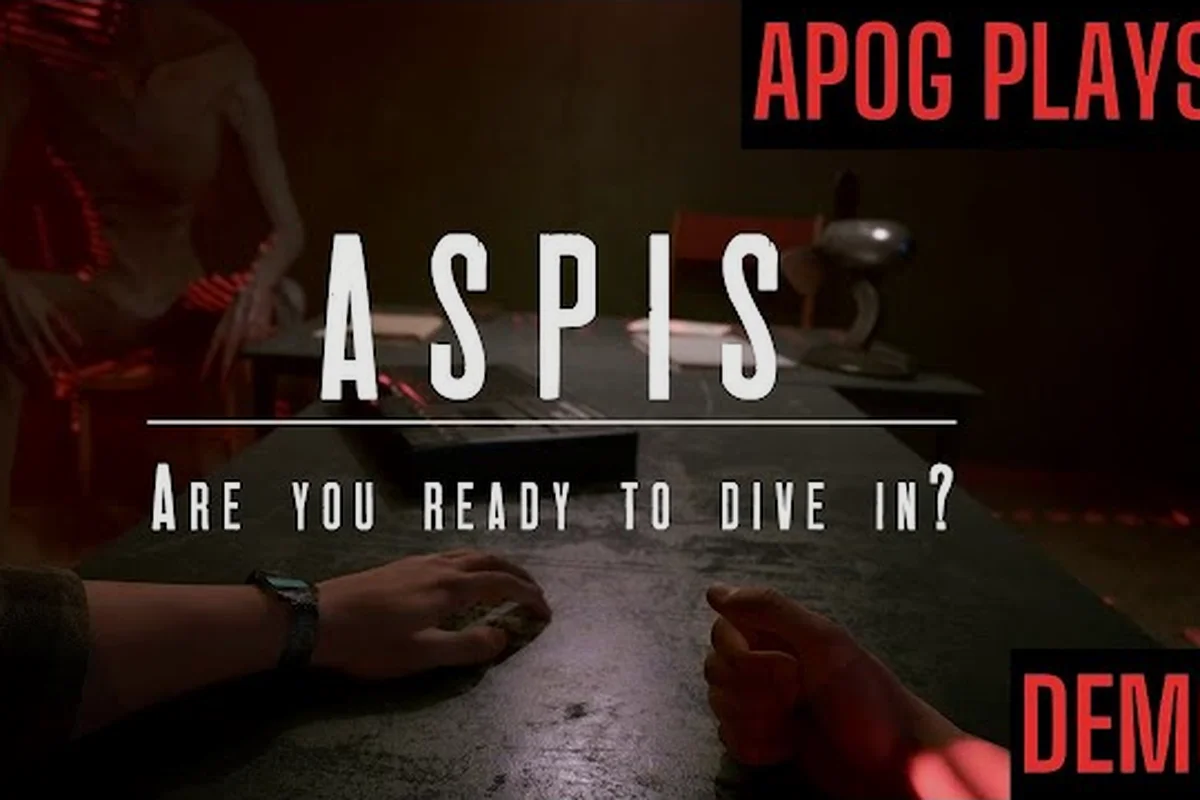
ASPIS environmental puzzles reward players who inspect the institute instead of rushing through locked paths. Hidden doors, secret rooms, and alternate routes can turn a dead end into a crucial discovery, especially when the surrounding space refuses to explain itself.
How ASPIS Environmental Puzzles Work
The official ASPIS materials describe the game as a spatial experience built around the Institute of Cybernetics, OGAS terminals, the PEP-01, and layers of reality. That structure matters because the environment is not merely a backdrop: machinery, corridors, windows, and unusual objects can become part of the solution. The puzzle language is built around observation and experimentation rather than a conventional inventory of puzzle items.
The game’s premise supports this approach. According to the official ASPIS website, the system is described as a passage into spaces whose physical rules stop matching our own, while the official Steam page places the story in the Soviet Union in 1987. The institute therefore feels like a functioning research facility whose architecture, equipment, and documents all carry pieces of the larger mystery.
| Puzzle cue | What to inspect | Likely role |
|---|---|---|
| A recessed wall panel | Edges, shadows, and repeated architectural patterns | Possible hidden-door marker |
| An unusual machine | Power connections and movable components | May unlock an alternate route |
| A terminal response | Surroundings rather than only the screen | Can reveal a location or mechanism |
| A contradictory object | Nearby records and environmental context | Often supports a secret-room discovery |
| A door with no clear purpose | Its frame, handle, and adjacent surfaces | May be an aspis locked door or decoy |
The most important rule is to treat every unusual feature as worth a short investigation. You do not need to inspect every surface equally; instead, notice what differs from the surrounding architecture. In ASPIS, a modest change in material, sound, lighting, or machinery behavior can carry more information than a large visual landmark.
The core observation loop
A reliable approach is to divide exploration into a repeatable cycle. First, identify the environmental anomaly. Next, compare it with nearby objects or records. Then test the safe interaction, observe what changes, and return to earlier spaces if the response creates a new question. This loop keeps the player oriented while allowing the institute to gradually disclose how its systems connect.
Because official material does not publish named puzzles, code answers, capacities, or fixed solution steps, the safest guide is the documented method: interact with Energy X, use machinery and terminals, and open astral windows when the situation appears to require a change of layer. Specific combinations must be discovered in play rather than assumed from a spoiler list.
Finding an ASPIS Hidden Door
An aspis hidden door usually blends into the function of the surrounding room. Look for a panel that is slightly cleaner than its neighbors, a handle positioned differently from other doors, a wall that produces a different sound, or a light source aimed at a blank section. These clues matter because the player is not looking for a magical button; the player is looking for a break in the building’s visual pattern.
Start with the frame before testing the door itself. Run your view along the top, bottom, and sides, checking for gaps, screws, hinges, or an unusually smooth patch. A hidden entrance may not have a conventional handle. It may respond to machinery, Energy X, a terminal, or an action performed somewhere else in the room.
| Check | Strong signal | Best response |
|---|---|---|
| Wall alignment | One section sits slightly proud or recessed | Interact with the contrasting section |
| Surface wear | A clean panel interrupts aged paint or concrete | Inspect the whole panel rather than the obvious handle |
| Audio | Footsteps, machinery, or a response differ near it | Stop, listen, and compare nearby surfaces |
| Lighting | A beam or reflection marks a blank wall | Trace the light path |
| Floor debris | Dust, cables, or objects stop at one edge | Inspect the floor boundary |
The best aspis puzzle tips come from recording anomalies before acting. A single open attempt may reveal little, especially if a mechanism changes the room’s layout. Take note of what moved, what sounded, and which nearby machine responded. The next attempt can then begin with the relevant clue instead of repeating the same route.
A locked entrance may also function as a deliberate invitation. If an aspis locked door blocks the obvious path, check nearby rooms for an active device, a concealed lever, a transferable object, or a terminal that changes the surrounding space. The answer often lies in a relationship between locations rather than in a universal key concealed within the same room.
Distinguish a hidden door from ordinary clutter
Aspis puzzle difficulty rises when every industrial object looks equally significant. One way to reduce confusion is to group discoveries into three categories: interactive surfaces, environmental landmarks, and recently changed objects. Interactive surfaces respond when tested, landmarks help you navigate, and changed objects suggest that another puzzle has already altered the area.
Keep this classification practical. If a wall does not react after several reasonable interactions, mark it as a navigation landmark rather than forcing a solution. This prevents a search from turning into repetitive clicking, especially in the institute’s many connected spaces. The ASPIS puzzle guide provides a broader look at the game’s machinery-based puzzle loop, while the environmental approach here focuses on how spaces communicate with one another.
Discovering an ASPIS Secret Room
An aspis secret room is usually revealed by a sequence: you notice a contradiction, manipulate an object, and then revisit a familiar area with new assumptions. The room may be physically modest, but its information can change the meaning of nearby rooms, documents, or objectives. That makes a secret discovery useful even when it contains no conventional treasure.
Common triggers include machinery that lacks a visible power source, a corridor whose geometry feels inconsistent, an object positioned for access rather than display, and a record that describes a space absent from the official map. Because ASPIS has no documented quest-marker or map system, players must build their own mental map from recognizable surfaces and recurring landmarks.
| Secret-room signal | Investigation | Possibility |
|---|---|---|
| Machinery with no clear connection | Follow each visible line | The device may be hiding a passage |
| A terminal describing an unvisited route | Compare the room’s shape with the record | The terminal may mark a concealed area |
| A movable object with an odd resting place | Try natural interaction points | It may release a catch or panel |
| A room that looks identical in two places | Check smaller details and lighting | A copied facade may conceal a difference |
| An object found behind ordinary scenery | Inspect nearby walls and thresholds | The area may extend beyond the visible route |
The strongest approach is to map anomalies before changing them. Write down which corridor ends at a wall, which device faces a specific direction, and where a sound originates. These anchors help you notice when a previously explored room has changed after using Energy X or operating a machine. For deeper help with layer changes, see the guide to capturing X-spheres in ASPIS.
A secret room may also be reached indirectly. An object from one area can become the means of opening a route elsewhere, while a portal or astral window may reveal a section that cannot be approached from the current layer. The ASPIS object-transfer puzzle guide covers the broader relationship between movable objects, machinery, and terminal-driven devices.
ASPIS Puzzle Difficulty and Common Failure Points
The difficulty of ASPIS environmental puzzles is less about obscure button combinations and more about maintaining attention across connected spaces. The institute provides environmental storytelling, machinery, records, and multiple realities, so the solution may require a player to combine evidence gathered in several locations. Official materials do not publish a formal difficulty setting for puzzles, and they provide no step-by-step answer key.
| Failure point | Why it happens | Corrective action |
|---|---|---|
| Fixating on one door | A locked entrance may redirect the player elsewhere | Search the room for a linked mechanism |
| Treating every machine alike | Similar-looking devices may perform different roles | Check power, movement, and terminal response |
| Ignoring a recent change | A new route may open after another system is used | Revisit nearby rooms after major interactions |
| Forgetting small environmental cues | A sound or lighting shift may mark the solution | Pause and compare each surface |
| Confusing secrecy with complexity | A secret route can be simple once identified | Test the most unusual accessible detail |
| Skipping records | Documents may explain what the space was built to do | Read nearby records before rearranging objects |
Player experience suggests that the most common source of confusion is entering a room with only one goal in mind. A broader aspis puzzle difficulty assessment comes from treating the environment as a network. Each machine, document, doorway, and terminal can influence more than the challenge directly in front of you.
When stuck, use a three-pass method. First, inspect what is visibly different. Second, test movable or powered components. Third, retrace the last area where something changed. This method is more reliable than random interaction because it creates a sequence of comparisons. It also reveals whether the blocked route depends on a missing tool, a different layer, or a mechanism that was activated in another location.
Use clues without turning the game into a checklist
A strict checklist can make the institute feel less mysterious, but it can also cause premature optimization. Some interactions may not produce an obvious reward, and the Cat’s role as a guide to the rules suggests that the system expects experimentation. Keep notes of definite facts—opened routes, changed lighting, moved objects, and machine responses—while leaving enough room to test uncertain ideas.
The guide to documents and backtracking is especially useful when the environmental solution is not immediately visible. Records can establish what a machine, person, or restricted area was intended to serve, giving the player a concrete hypothesis to test in the world.
A Practical System for Exploring ASPIS
A successful search depends on organization. Use a short route log that records the room, the anomaly, the action taken, and the result. You do not need a map system or a complex spreadsheet; four short entries per major area are often enough to prevent repeated searches and preserve progress.
Before interacting
Pause and survey from a distance. Identify what draws the eye, then inspect the entire wall, floor, and ceiling around that feature. Check whether the object is damaged, clean, powered, or facing something meaningful. These physical comparisons separate an environmental signal from ordinary industrial decoration.
-
Note any object that blocks a path without an obvious purpose.
-
Compare doors and panels for mismatched edges or materials.
-
Listen near machinery before choosing an interaction.
-
Identify which objects appear to depend on the same power source.
-
Mark the last safe position before operating a complex device.
During the interaction
Change one variable at a time when possible. Move an object, then step back and observe. Operate one machine, then check the room before activating another. If several systems are involved, keep a simple order in your notes so that you can reproduce the sequence. This is especially valuable when the response changes lighting, door states, or access between layers.
Energy X interaction is the clearest documented example of this process. The official description presents the PEP-01 as a device that interacts with Energy X and opens astral windows between layers of reality. Rather than treating X-spheres as generic puzzle answers, think of them as movable resources that can alter which routes or systems become usable.
After the interaction
Look backward as well as forward. Turning around can reveal that a machine has opened a nearby panel, while walking through a doorway can expose a new angle on the room you just left. Then compare the current space with your earlier notes. The crucial question is not merely whether something opened, but whether the room’s layout, power flow, or connected route has changed.
| Route-log entry | Example description | Why it helps |
|---|---|---|
| Location | “Machine room near the red corridor” | Provides a recognizable landmark |
| Anomaly | “Panel behind the inactive unit is clean” | Separates observation from assumption |
| Action | “Powered the adjacent unit” | Records what you actually changed |
| Result | “Panel shifted; narrow passage visible” | Connects cause with effect |
| Follow-up | “Check the far side of the new passage” | Prevents a two-minute discovery from being forgotten |
This approach also makes the game less frustrating when an answer depends on a later return trip. A recorded anomaly is easier to revisit than a vague memory that something in the institute once looked unusual.
Alternate Routes, Layer Changes, and Missed Discoveries
Environmental puzzles in ASPIS can create alternate routes rather than simply place a reward behind a door. Moving an object may expose a maintenance passage, changing a machine may alter a connection between rooms, and opening an astral window may place the player in a different spatial context. These changes can also affect later puzzles, making exploration order relevant.
| Interaction | Environmental result | Investigation priority |
|---|---|---|
| Move or transfer an object | Exposes a new contact point | Check the object’s former resting place |
| Power machinery | Changes doors, lighting, or power flow | Revisit nearby connected rooms |
| Use a terminal | Reveals or alters a system response | Compare the terminal location with its apparatus |
| Open an astral window | Changes the reachable layer or route | Inspect the new area and its return point |
| Restore a previously blocked connection | Unlocks a route that was inaccessible | Recheck adjacent rooms for linked secrets |
This creates a useful distinction between a locked route and a hidden route. A locked route explicitly denies passage and usually points toward a key, combination, or operating condition. A hidden route disguises the fact that passage is possible, so the player must infer a connection from subtle environmental evidence. The guide to opening locked doors can help separate those two categories.
Alternate-route hunting works best after a substantial pass through an area. Return with a different objective, such as finding power for an unused machine or locating the source of a repeated sound. The Cat’s guidance suggests that rules become clearer through observation, and the best environmental insight often arrives after the player has seen enough of the building to understand its patterns.
Keep a separate secret-route list
Some discoveries are not required for immediate progress, but they can reveal how the institute works. Keep them separate from active objectives so you can revisit them without confusing them with necessary tasks. Include the trigger, expected destination, and any state change associated with each route. This is also useful when two puzzle states interact, because the log shows which action altered the space.
Because ASPIS features one final choice and two endings, optional environmental discoveries may provide context that helps players interpret the system’s choices. The official ASPIS achievements list includes objectives tied to objects, a freed prisoner, and layered discoveries, but it does not publish percentages or complete puzzle-solution details.
Frequently Asked Questions
Where should I look first for an aspis hidden door?
Inspect architectural inconsistencies first, especially recessed panels, mismatched edges, unusual handles, and blank walls near machinery. A hidden door often differs slightly from its neighbors, but the key clue may be a connected power line, sound source, or nearby terminal. Move an accessible object and compare the affected wall before moving to another room.
How do I find an aspis secret room without a quest marker?
Track environmental contradictions, such as a machine without a visible connection, a record describing an absent route, or a repeated sound near an ordinary wall. Test the anomaly, then revisit nearby spaces to see what changed. ASPIS has no documented quest-marker system, so a brief location and observation log is more useful than searching for an icon.
Are aspis locked door puzzles solved with universal keys?
No universal solution is documented. A locked door may depend on a nearby mechanism, a transferred object, Energy X, a terminal, or a change between layers. Examine the frame and the room before assuming a key is missing. If the door remains unresponsive, look for a recently changed machine or a route that connects back to another solved puzzle.
Why do ASPIS puzzles feel difficult without a hint system?
The institute combines spatial exploration, machinery, documents, and layer changes, so the relevant clue may be separated from the solution. Difficulty also comes from maintaining context across rooms. Recording changed objects and active machinery helps, but leave room for experimentation because some official objectives are discovered through interaction rather than direct task guidance.
What is the best approach to aspis puzzle tips for secret rooms?
Map each room’s distinct features before operating equipment, then revisit it after any major system changes. Pay attention to lighting, sound, power routing, and objects that no longer match their surroundings. The core loop is straightforward: observe an anomaly, test one interaction, compare the result, and follow any new connection revealed by the changed environment.