
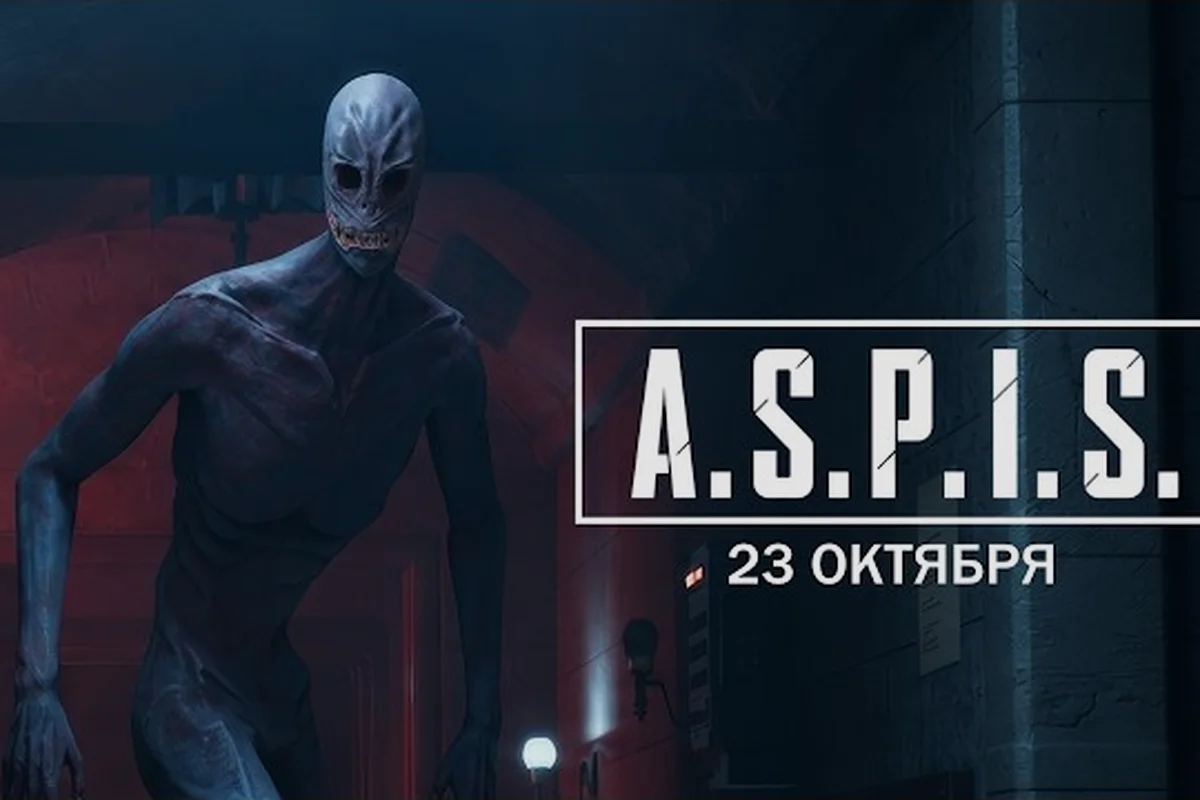
ASPIS character backstory matters because Andrey, Anna, and Liza anchor the story in a family crisis inside a 1987 Soviet experiment. The official details reveal their relationships, while the strange Institute, OGAS terminals, and volunteer program show how their lives become tied to a world where familiar laws fail.
Andrey's Role in the ASPIS Character Backstory
Andrey is the clearest entry point into the ASPIS character backstory because the official material identifies him as the engineer at the center of the experiment. He is not presented as a conventional action hero; he is a professional whose technical role places him inside a research project that quickly turns into a survival nightmare. His connection to the Institute and its OGAS terminals gives him both purpose and a path deeper into the anomalous environment.
The setting is an alternate-history USSR in 1987, and the game presents Andrey as someone already connected to this world before the story's central incident. According to the official ASPIS page on Steam, the narrative begins with an engineer, his deceased wife Anna, and their daughter Liza, followed by six volunteers connected to an Institute of Cybernetics experiment. This establishes the emotional stakes before the supernatural elements become dominant.
A Professional Trapped by the Experiment
Andrey's backstory is defined by a sharp contrast between his ordinary competence and the impossibility of the system surrounding him. The PEP-01 device interacts with Energy X and opens astral windows between layers of reality, giving him a tool that resembles scientific equipment while also functioning as a gateway into something beyond normal physics. His engineering mindset therefore becomes narratively important, even though official material does not publish a detailed biography or list of academic specialties.
| Andrey element | Confirmed information | Backstory significance |
|---|---|---|
| Profession | Engineer | Places him inside a technical Soviet research setting |
| Family | Husband of Anna and father of Liza | Gives the experiment immediate personal stakes |
| Location | Institute of Cybernetics | Connects him to the research program |
| Equipment | Uses the PEP-01 | Links scientific work with the astral windows |
| Objective | Seeks answers and moves deeper | Suggests escalating responsibility, though his exact motive remains open |
This table separates established facts from interpretation. Andrey clearly has a family to protect and a role inside the experiment, but the official story page does not explain his exact project duties, childhood, or reasons for volunteering. A broader discussion of who Andrey is and how he relates to Maria and Evgeny Kotov can help separate those character-specific details from the larger Institute mystery.
Anna and Liza: The Family Anchor
The family connection is the most securely documented part of the aspis character backstory. Anna is Andrey's deceased wife, while Liza is his daughter. Their presence gives the experiment a boundary between ordinary human loss and the even stranger danger encountered through the PEP-01. Even though Anna is deceased, she remains part of the narrative identity of the family rather than functioning as a disposable background mention.
Liza's role raises a different kind of question. The official description introduces her as Andrey's daughter, but it does not publish her age, personality, participation in the experiment, or exact fate. That silence is important for accurate analysis. A character guide should not fill the gap with invented memories or personal history. Her presence is confirmed; her inner life remains a deliberate area of interpretation for players.
What the Family Changes About the Stakes
Without Anna and Liza, the Institute could be read only as a science-fiction facility. Their inclusion makes the anomalies personal. Andrey is no longer simply investigating a system; he is carrying memories of his wife and concern for his daughter while entering a place where the rules of reality are unstable. The family therefore supplies emotional context without requiring the game to provide a complete conventional biography.
| Character | Relationship to Andrey | Confirmed status | Unpublished detail |
|---|---|---|---|
| Anna | Deceased wife | Named as part of Andrey's family | Cause and circumstances of death |
| Liza | Daughter | Named as part of Andrey's family | Age, personality, role, and fate |
| Andrey | Husband and father | Engineer and experiment participant | Private history and exact duties |
This does not mean every ambiguity has equal weight. The official source explicitly states that Anna is deceased, making that part of Andrey's situation concrete. It merely mentions Liza as his daughter, so claims about her involvement in the experiment would go beyond the available evidence. The same restraint applies to any theory about whether family memories, grief, or attachment influence Andrey's choices.
The Institute and Its Experimental Framework
The Institute of Cybernetics is the institutional center of the aspis characters and the setting around which most personal histories become uncertain. The developer built its locations from reference images of Soviet-era research sites, industrial plants and storage buildings, giving the game a documentary visual foundation. Even so, the game does not simply reproduce a historical facility. It uses recognizable institutional architecture to frame a research program involving OGAS terminals, Energy X, astral windows, and volunteers whose experience cannot be understood through ordinary Soviet science.
The project's architecture is summarized by the initials ASPIS, which stand for Autonomous System for Predicting Historical Events. The project apparently aims to predict history through a system capable of reaching into other layers of reality. That ambition explains the presence of Andrey as an engineer, the PEP-01, the OGAS interface, and the volunteers. It also creates the central contradiction: the system appears to reach beyond its intended boundaries.
Experiment, Bridge, or Simulation?
Official materials explicitly say that ASPIS was not a simulation but a passage into spaces whose physical rules stop matching our own. The distinction matters for the family and cast alike. If it were a virtual environment, Anna and Liza could represent memories, grief, or mental constructs without contradicting one another. A bridge implies that the characters encounter a real or ontologically unstable destination, though the precise nature of that place remains unclear.
| Element | Official description | What it does for the story |
|---|---|---|
| ASPIS | Autonomous System for Predicting Historical Events | Frames the project as a historical prediction system |
| Institute of Cybernetics | Central research organization | Houses the experiment and its personnel |
| OGAS terminals | Interfaces associated with the system | Provide points of access and instruction |
| PEP-01 | Device that interacts with Energy X | Opens astral windows between reality layers |
| Energy X | Force or substance used by the device | Remains unexplained in the public material |
| Six volunteers | People connected to the experiment | Provide a human bridge between science and anomaly |
The experiment was designed to last days, but well over a year elapses inside the system because time moves far faster there. A year after the experiment begins, none of the six volunteers has awakened. These facts make the aspis cast collectively trapped in an event that should have been brief. They also explain why Andrey cannot treat the environment as a temporary technical problem.
For a more focused examination of the program's broader implications, the ASPIS character and relationship analysis can be useful, especially when separating documented events from player theories about the Devil and the Institute.
The ASPIS Cast and Their Documented Roles
The official material names only a limited cast, so any reliable overview must distinguish characters from generic volunteers, enemies, and background figures. The principal names are Andrey, Anna, Liza, the Director, the Cat, the Guardian, the Devil, Maria, Evgeny Kotov, the Keeper, and the freed prisoner. The official achievements also refer to several narrative objects, including a packing machine, the Devil's cage, and a portrait drawing, but those are not people and should not be included in a cast list.
The aspis cast therefore includes characters with confirmed narrative functions and characters whose deeper motives remain unknown. Andrey is the playable engineer, the Director guides him farther into the system, and the Cat helps him interpret its rules. Maria, Evgeny Kotov, and the freed prisoner receive meaningful references in achievements or story material, but their complete backgrounds are not published.
Confirmed Functions Versus Unknown Motives
| Character | Confirmed role or reference | What remains open |
|---|---|---|
| Andrey | Engineer, husband, father, and player viewpoint character | Full biography, personal history, and exact Institute duties |
| Director | Leads Andrey deeper while promising answers | Identity, methods, and ultimate purpose |
| Cat | Helps Andrey understand the rules of the place | Full identity and long-term motives |
| Maria | Referenced in an achievement tied to a first meeting | Extensive biography and relationship history |
| Evgeny Kotov | Can be found in the tunnels | Background and role in the wider conflict |
| Keeper | Associated with the Keeper's Seal achievement | Full history and precise allegiance |
| Freed prisoner | Found near the edge of the island and heard out | Identity and history before imprisonment |
| Guardian | An entity that cannot simply be shot | Nature, origin, and role |
This table is intentionally conservative. A character can be important without having a published origin story. In particular, the Guardian and Keeper function strongly in the narrative, but the store description does not provide personal histories for them. The ASPIS character names overview can serve as a compact reference when the cast grows difficult to track.
How the ASPIS Endings Shape Character Interpretation
ASPIS is built around one final choice and two endings, so character interpretation cannot be separated entirely from consequences. The story presents Andrey's relationships, the Institute's decisions, and the volunteers' entrapment as elements that lead toward a final decision. Official material does not publish a spoiler-free account of how each character is treated, but it does confirm that the final outcome is not fixed by a single linear path.
The endings matter to the aspis endings and characters relationship because they determine how the emotional and institutional threads resolve. Anna and Liza establish why Andrey's decisions carry personal weight. The Director represents the authority that has led him into the system, the Cat provides guidance within it, and the other named figures create distinct human pressures. Even without a full ending chart, these roles let players evaluate the final choice in terms of loyalty, trust, and responsibility.
Reading Characters Through the Final Choice
Rather than treating the endings as isolated outcomes, players can ask which promised answer the final choice accepts. The Director's offer of knowledge, the Cat's guidance, and Andrey's family obligations all point toward the larger question of who controls a technology that has crossed its intended limits. The endings then function as the consequences of a judgment made under unstable conditions.
| Character thread | Narrative pressure | Best way to interpret it |
|---|---|---|
| Anna | Loss already attached to Andrey's life | A reminder that knowledge cannot undo every personal cost |
| Liza | An unresolved family obligation | A source of emotional stakes, not a confirmed objective marker |
| Director | Offers guidance and answers | A figure of institutional authority whose full motive is undisclosed |
| Cat | Teaches the rules of the anomalous place | An interpreter whose reliability and larger purpose are not fully explained |
| Volunteers | Trapped for more than a year | A collective measure of the Institute's failed expectations |
Because the official achievement list names two ending achievements, Let Go and World on Fire, players have evidence that both routes are distinct. The labels, however, do not replace a detailed account of what happens to each character. Anyone wanting a path-focused comparison can consult the ASPIS ending differences alongside this character analysis.
Interpreting the Institute Without Invented Lore
A strong aspis character backstory should distinguish what the game states from what players infer. The Institute is a Soviet research organization in an alternate 1987, its architecture draws on real facilities, and its experiment connects an engineer, six volunteers, OGAS terminals, the PEP-01, and Energy X. The program crosses into a place where ordinary laws do not apply. Those are enough established facts to support meaningful interpretation.
What the official source does not reveal includes the full identities of the volunteers, the Director's personal history, the origin of the astral windows, the nature of the Guardian, and the final fate of most named characters. Community accounts and player theories may add clues, but according to community reports, interpretations vary around the Devil, the Institute, and the nature of the experiment. Such claims should remain labeled as speculation rather than being rewritten as canonical biography.
How to Separate Confirmed Backstory From Guesswork
| Claim | Verification status | Best treatment |
|---|---|---|
| Andrey is an engineer | Official | State directly |
| Anna is his deceased wife | Official | State directly |
| Liza is his daughter | Official | State directly |
| The project involves six volunteers | Official | State directly |
| The Institute caused the anomaly | Suggested, not fully documented | Present as an interpretation |
| The Devil controls the system | Player theory | Label as theory |
| A character survives a particular ending | Requires ending-specific confirmation | Avoid unless verified in play |
| Anna's death caused the experiment | Unconfirmed | Do not state as fact |
This method prevents theories from hardening into false biography. It also improves the practical value of the article: readers can distinguish canonical evidence, interpretation, and unresolved questions. Most importantly, the main aspis character backstory remains anchored to the relationships that official material actually establishes.
Frequently Asked Questions
Who is Andrey in ASPIS?
Andrey is the game's central engineer and player viewpoint character. Official material connects him to the Institute of Cybernetics, his deceased wife Anna, his daughter Liza, the PEP-01, and the six-volunteer experiment. His broader personal history, exact job title inside the Institute, and private motives have not been publicly documented.
What is Anna's role in the story?
Anna is Andrey's deceased wife, and her loss is the one explicit family fact that helps define his personal stakes. The official store page names her but does not explain the cause of her death, the circumstances surrounding it, or whether she appears directly inside the system. Any further claim about her role is interpretation rather than confirmed biography.
Is Liza connected to the experiment?
Liza is officially identified as Andrey's daughter, but her age, personality, activities, and involvement in the Institute experiment are not stated in the available public material. Players can safely describe her as a central family reference in Andrey's story. Claims that she actively participates, possesses a specific ability, or meets a fixed fate require direct in-game evidence.
Who belongs to the ASPIS cast?
The confirmed named cast includes Andrey, Anna, Liza, the Director, the Cat, the Guardian, the Devil, Maria, Evgeny Kotov, the Keeper, and a freed prisoner. Official material provides clear roles for some figures but leaves many motives and backgrounds open, so the cast is best understood as a mixture of named characters and deliberately unresolved figures.
Does the ending determine Andrey and Anna's fate?
The game has one final choice and two endings, but the public store description does not provide a complete character-by-character fate chart. The ending achievements are titled Let Go and World on Fire, confirming separate outcomes without revealing every consequence. Players should verify ending-specific details in their playthrough rather than treating either title as a complete summary.